
How to choose dark sports sunglasses for everyday running
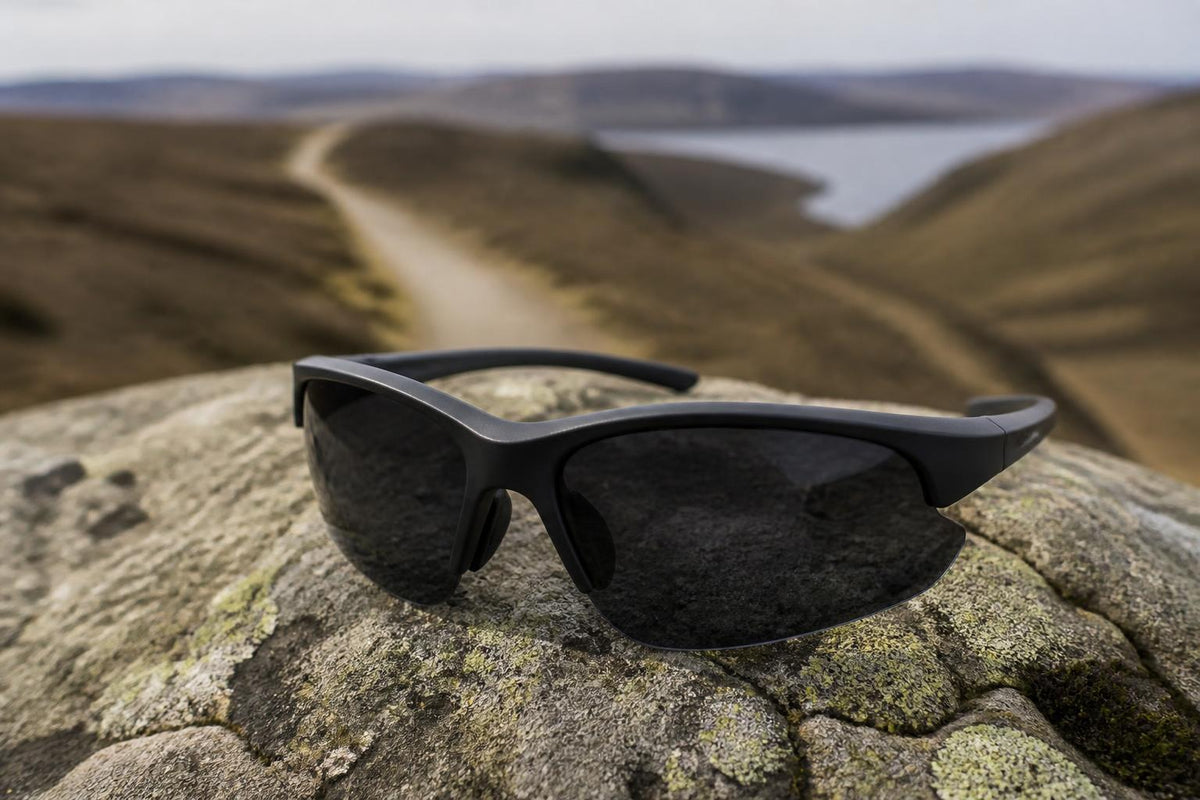
Choosing dark sports sunglasses for everyday running is mostly about function first, looks second. A good pair should stay put when you settle into your stride, shield your eyes from glare and wind, and remain comfortable for the full run, whether that is a quick 5K before work or a longer social run at the weekend. Black frames are popular because they are easy to wear with any kit and tend to look understated, but frame colour on its own does not make a pair better for running.
For most UK runners, the best choice is the pair that works across mixed conditions. That usually means secure fit, useful eye coverage, a lens tint that still works when the cloud rolls in, and enough ventilation to reduce fogging when the pace changes. If you are browsing our running sunglasses for everyday training, those are the points worth checking before you get drawn into style alone.
What black sports sunglasses need to do on an ordinary UK run
On a normal run in Britain, sunglasses are not just for bright summer days. They help with low winter sun, glare off wet roads, wind on exposed paths, and the general irritation of dust, grit and insects. If you run through parks, along canal paths, or near traffic, that basic eye protection matters more than many people expect.
For recreational running, we think sports sunglasses need to do five jobs well.
First, they need to cut glare without making everything too dark. That is especially important in the UK because our light is often inconsistent. You might leave home under flat cloud, turn a corner into bright low sun, then finish in drizzle. A lens that only works in strong sunshine can be frustrating for most of the year.
Second, they need to give stable coverage. When you are moving, your head position changes constantly. You look ahead, glance down at the pavement, check traffic, or read your watch. A running pair should keep your eyes covered through those movements, not leave gaps that let light or wind in from above or the sides.
Third, they need to stay comfortable when you sweat. A pair that feels fine for five minutes in the house can become annoying after half an hour once moisture builds up around the nose and temples.
Fourth, they need to work with ordinary running kit. Many runners wear a cap in summer, a beanie in winter, or a buff around the ears on cold mornings. Sunglasses that clash with all of that are less likely to be used.
Fifth, they need to be practical enough that you actually bring them. That sounds obvious, but it matters. If a pair feels too precious, too bulky, or too awkward to carry when the weather is uncertain, it may spend more time in a drawer than on your face.
This is where black sports sunglasses make sense as a style choice. Black frames are neutral, easy to pair with shorts, leggings, gloves and outer layers, and they tend not to date quickly. For many runners, that means one pair can cover weekday runs, parkrun, easy rides and general outdoor training. What black does not do is improve optics, grip or protection by itself. Those come from the frame design, lens quality and fit.
How to judge fit before colour or style
Fit is the first filter. If the fit is wrong, the lens tint and frame colour barely matter.
Start with coverage. Put the sunglasses on and look straight ahead, then down, then left and right. The frame should protect your eyes without blocking your normal view too heavily. For road and pavement running, you need to see kerbs, puddles, uneven surfaces and traffic clearly. If the lower edge of the frame cuts into your field of vision when you glance down, that can become irritating quickly.
Next, check the nose fit. The sunglasses should sit securely on the bridge of your nose without pinching. If they sit too high, they may interfere with your brow or cap peak. If they sit too low, they can bounce and slip once you start sweating. A good sports fit feels planted but not tight.
Then assess the arms. The temple arms should grip enough to stop movement, but not squeeze so hard that you notice pressure around the ears. A common problem with poor fit is a pair that seems secure in the shop or at home, but creates a hot spot behind the ear after twenty minutes. If you wear a cap, test the sunglasses with the cap on. The pressure changes.
Bounce is the easiest thing to underestimate. Before you decide, jog on the spot, nod your head, and lean forward as if you are running downhill. If the frame shifts every time you move, it will be worse outdoors. A running pair does not need to feel clamped on, but it should stay settled through repetitive movement.
Pressure points usually show up at the nose bridge, the temples, or behind the ears. Even mild discomfort often becomes a reason not to wear the glasses. We would always choose a slightly plainer pair with a better fit over a more striking pair that needs constant adjustment.
Compatibility with headwear matters more in the UK than many people realise. A lot of everyday runners swap kit through the year, cap in summer, lighter hat in autumn, warmer headwear in winter. If you already use a cap and are thinking about how the whole setup works together, it is worth looking at your sunglasses alongside the rest of your layering system, including a lightweight base layer for cooler runs or other small accessories that affect comfort over an hour outside.
If you have a broader face, narrow frames can create pressure and reduce side coverage. If you have a smaller face, oversized wraparound styles can sit too close to your cheeks and fog more easily. Face shape is not about fashion here, it is about whether the frame geometry suits your features.
Which lens tint works best in British conditions?
For British running, the most useful lens tint is usually the one that copes with variety. We rarely get long stretches of one stable light condition, especially if you run early or late in the day.
Very dark lenses can be excellent in strong summer sunshine, but they are often less versatile for ordinary UK use. If your route includes shaded paths, tree cover, underpasses or overcast stretches, a lens that is too dark can make detail harder to read. That matters on uneven ground and broken pavements.
At the other end, a very light lens may feel comfortable under cloud but do less against glare when the sun appears. Many runners are best served by a middle-ground tint, dark enough to take the edge off bright conditions, but not so dark that it becomes limiting as the light changes.
Contrast is worth considering too. In mixed weather, a lens that helps you distinguish surface changes can feel more useful than one that simply darkens everything. We are careful not to make grand claims here, because no lens turns poor light into perfect visibility, but some tints are easier to live with in flat British conditions than others.
Low sun is a specific UK problem, especially in autumn and winter. The issue is often not blazing brightness overhead, but the sun sitting low across the road or path. In those moments, coverage and glare reduction matter more than the darkest possible lens. A decent lens with good frontal coverage can be more practical than an extremely dark lens in a shape that leaves gaps.
If you also cycle, lens choice becomes even more noticeable because speed increases airflow, debris risk and changing light exposure. For mixed use across running, training and social rides, versatility usually wins over specialisation.
One practical point that gets overlooked is that lens performance is only useful if the lens stays clear enough to use. Fogging, smearing from sweat, and poor visibility in drizzle can make a theoretically perfect tint less helpful in real life. That is why we look at tint together with frame shape and ventilation, not in isolation.
What frame shape, weight and ventilation mean in use
Frame shape changes how sunglasses behave once you are moving. The broadest choice is usually between more wraparound designs and more open, less curved shapes.
Wraparound styles typically give better side coverage. That can help with wind, glare from the edges, and a more secure sports feel. They are often popular for faster running, exposed routes and cycling because they create a more protective envelope around the eye.
The trade-off is airflow. A close-fitting wraparound frame can trap warm air more easily, particularly if it sits near the cheeks or brow. On cool starts, humid days, or stop-start sessions, that can increase the chance of fogging.
More open shapes generally allow more ventilation. They can feel lighter and less enclosed, which some runners prefer for easy miles, commuting, and all-purpose wear. The trade-off here is that they may let in more light, wind or rain from the sides, depending on the design.
Weight matters, but not always in the way people assume. The lightest pair is not automatically the best. What matters is whether the weight is balanced well enough that the sunglasses do not slide forward or bounce. A slightly sturdier frame with better balance can feel less noticeable on the run than an ultra-light pair with poor grip.
Ventilation features, whether built into the frame shape or the lens design, are useful because running effort changes. You might start cold, warm up after ten minutes, then slow for traffic lights or a group regroup. Those shifts are exactly when fogging appears. Good airflow helps the sunglasses adapt to those changes.
For runners who also train on the bike, the balance shifts slightly. Cycling usually benefits from more coverage because of higher speed and stronger airflow. If one pair needs to cover both jobs, a moderately wrapped frame with reasonable ventilation is often a sensible middle ground.
If you mainly run easy miles, do gym sessions, and want one pair for general outdoor use, you may prefer a more open design that feels less technical. If you run in all seasons, use exposed routes, or combine running with regular cycling in bib shorts and jerseys, the extra coverage of a sportier frame can be worth it.
How to match sunglasses with the rest of your kit
Sunglasses work best as part of a kit system, not as an isolated purchase. For everyday running, that system does not need to be complicated, but each piece should make the others easier to use.
Start with headwear. A cap and sunglasses are a very practical combination in summer because the cap peak reduces overhead glare while the sunglasses manage frontal glare and wind. In colder months, a close-fitting hat or headband changes how the arms of the sunglasses sit around the ears, so comfort can shift with the season.
Gloves also matter more than they first appear to. On cold starts, runners often adjust sunglasses with gloved hands, so a pair that is easy to reposition without feeling flimsy is helpful. If you are building out a practical winter setup, our running gloves and arm sleeve options sit naturally alongside eyewear rather than as separate decisions.
Think about your clothing layers too. If you tend to overheat, heavily enclosed sunglasses paired with a warm hat and thicker top may push you toward fogging. A lighter top, sensible layering and better airflow through the frame can solve the issue more effectively than changing the lens alone. That is one reason we often consider sunglasses alongside your base layer, outer layer and route conditions.
For legwear and pockets, practicality counts. If the weather is uncertain and you may remove the sunglasses mid-run, you need somewhere to stow them safely. Some runners prefer a cap and sunglasses only when conditions clearly call for them. Others want a pair they can carry comfortably with the rest of their essentials. If your regular setup includes fitted tights or shorts, it is worth thinking about where the glasses go when you are not wearing them, just as you would with keys or a gel flask. Our leggings and running bottoms for everyday training are part of that broader conversation about what actually works on an ordinary run.
This practical approach is how we handle Field Notes at Fair Weather Runner. We are not trying to build an elite race-day fantasy around one accessory. We are helping ordinary runners put together kit that works on Tuesday mornings, drizzly evenings and weekend miles.
When a simple pair is enough and when it is worth paying more
A simple pair is enough when your needs are straightforward. If you run a few times a week, mostly on roads or parks, usually in moderate conditions, and you want eye protection, comfort and easy styling, you may not need every advanced feature available. A well-fitting entry-level pair can do the job very well if the lenses are clear enough, the frame stays put, and the build quality is sound.
That is especially true if this is your first pair of sports sunglasses. It can be more useful to learn what shape and fit you actually like than to spend heavily before you know whether you prefer more coverage, a lighter feel, or a certain lens tint.
It is worth paying more when the upgrade solves a real problem. That might be better lens clarity in changeable light, a frame that fits your face properly when cheaper ones do not, stronger durability if your kit gets regular use, or better ventilation if fogging has been an ongoing issue.
Durability matters if the sunglasses will be used across running, training and cycling, or if they are constantly being packed into bags, pockets and glove compartments. Hinges, arm grip and lens resilience all become more important with frequent use.
It can also be worth stepping up if you run through the seasons and want one dependable pair rather than several compromises. A better frame that remains comfortable in summer with a cap, and in winter with thicker headwear, often earns its place.
What we would not do is assume that more expensive automatically means more suitable. For many recreational runners, the biggest gains come from secure fit and sensible lens choice, not from buying the most technical-looking pair on the page.
If you are comparing options, use a simple checklist. Do they stay in place when you move? Can you wear them for an hour without noticing pressure? Is the lens tint usable in mixed British light? Will they work with your cap, gloves and usual layers? Do they feel sturdy enough for the way you train? Those questions are more revealing than the marketing language around them.
At Fair Weather Runner, operated by Fleeta Limited, that is the standard we apply across everyday kit, whether we are looking at sunglasses, a KYMIRA top, a winter fleece, or cycling pieces such as bib shorts. The goal is not to chase features for their own sake. It is to choose the item you will genuinely use.
For most runners, the right answer is simple. Pick the sunglasses that fit securely, suit British light, work with the rest of your kit, and feel good enough that you forget about them once the run starts. If they happen to be black, that is a versatile bonus, not the reason they succeed.
Are black sports sunglasses better for running?
Not automatically. Black usually describes the frame colour, which is mainly a style choice. For running, fit, lens suitability, grip and comfort matter more than whether the frame is black.
Should running sunglasses be very dark in the UK?
Not always. Very dark lenses can feel too dim on overcast days or shaded routes. Many UK runners prefer a tint that still works in mixed light rather than only in strong sun.
How should sports sunglasses fit?
They should stay put without pinching, sit clear of your eyelashes, and feel secure when you look down or run downhill. Pressure at the nose or temples usually becomes more noticeable over time.
Can I use the same sunglasses for running and cycling?
Often, yes. A stable fit, decent coverage and good airflow can work for both. Cyclists may prefer more wrap and wind protection, while runners may prioritise low weight and easy ventilation.
Do I need wraparound lenses for social runs?
Not necessarily. Wraparound styles can improve coverage and wind protection, but a less aggressive shape may feel cooler and more comfortable for steady everyday miles.