
How grip socks help on runs, gym sessions and recovery days
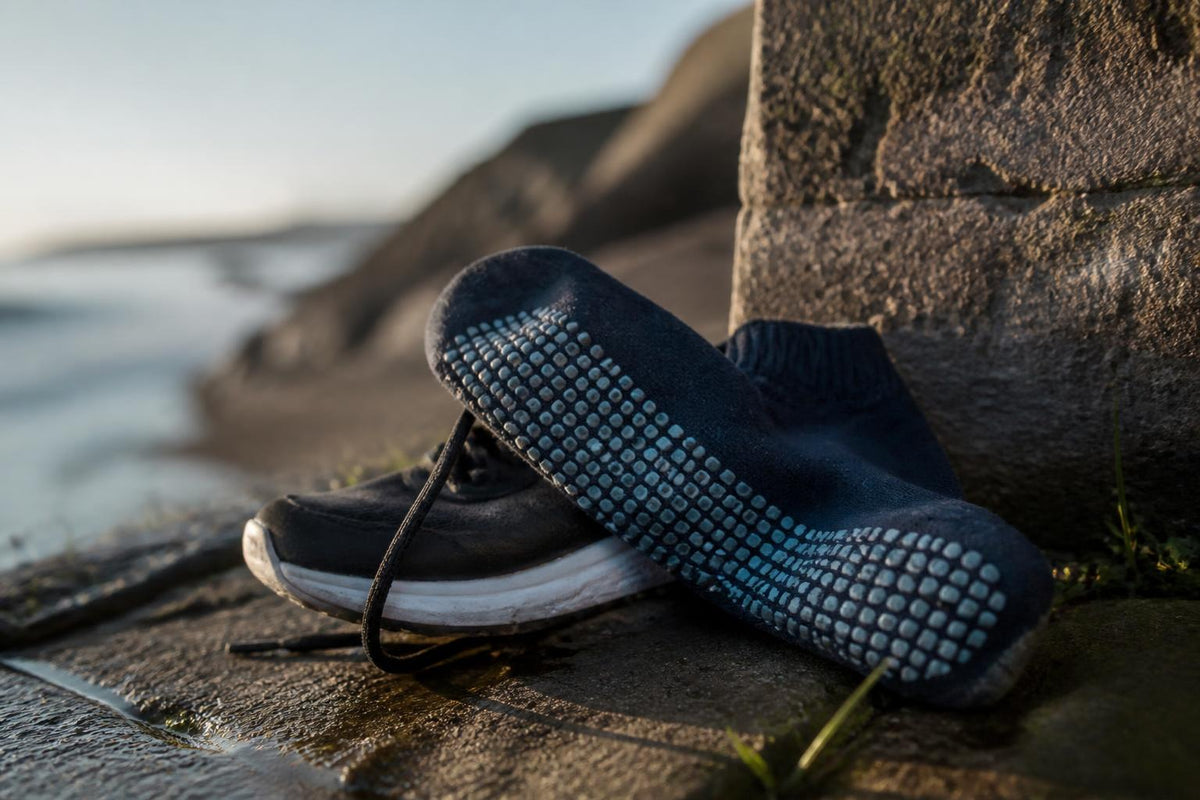
If you have ever felt your foot slide a touch inside the shoe on corners, on a treadmill, or during lunges and step-ups, grip socks are meant to deal with exactly that. They use small grip zones on the sole to create more friction between your sock and the shoe’s insole, so your foot stays a bit more settled. That can make running and training feel more secure, especially when shoes fit well overall but still allow a little internal movement.
That does not mean everyone needs them for every session. For many easy miles, ordinary running socks are absolutely enough. Grip sports socks tend to make the biggest difference when movement is more varied, when you are changing direction, or when you are wearing a shoe that feels slightly roomy through the midfoot or heel. The useful question is not whether they are “better” in general, but whether they solve a problem you actually notice.
What grip socks actually do inside your shoes
Inside any running or training shoe, there are two kinds of movement to think about. The first is the movement of the whole shoe against the ground, which is what the outsole and tread deal with. The second is the movement of your foot inside the shoe, which is where the sock matters.
Grip socks work on that second part. The grip pattern, often silicone or a similar tacky print, increases friction under the foot. In simple terms, your sock is less likely to glide across the insole when you push off, brake, climb, descend, or change direction. If you have ever felt your toes press into the front of the shoe on a downhill section, or your heel lift slightly during faster treadmill intervals, that is the sort of movement they are trying to reduce.
On an ordinary run, that can feel useful in a few familiar situations:
- when your shoes are a touch generous in volume, even though the length is right
- when your feet sweat more and the insole starts to feel slick
- when you are cornering on pavements, park paths or track bends
- when you are running hills and notice your foot shift on the way down
- when your gait gets untidy late in a run and you start moving around inside the shoe
In training sessions, the effect is often easier to notice. Gym classes, circuits and strength work involve starts, stops, side steps, split squats, lunges and loaded carries. Those movements create more side to side pressure than steady jogging does. A sock that helps your foot stay planted can make the shoe feel more connected to you.
That said, grip cannot correct a poor shoe fit. If your heel is lifting because the shoe is too big, or your forefoot is compressed because the shoe is too narrow, a grippy sock will not fix the underlying issue. It may reduce some slipping, but it cannot turn the wrong shape of shoe into the right one. We think of grip socks as a fine-tuning piece, not a rescue plan.
When they help most and when ordinary running socks are enough
Most runners do not need one type of sock for everything. A practical kit drawer usually has a few standard pairs for everyday use, and perhaps one or two more specialist options for certain sessions.
For easy outdoor runs, ordinary running socks are usually enough. If the route is steady, the pace is conversational, and your shoes already fit well, a good standard running sock does the job. You mainly want comfortable fabric, sensible thickness, no rubbing at the heel or toes, and enough hold through the arch and midfoot. We keep that in mind across our running socks for everyday miles and training.
For treadmill sessions, grip socks can be more useful than many people expect. Treadmill belts give a very repetitive stride pattern, and some runners notice a slight feeling of being pulled backwards through the shoe. If you already feel secure, there is no need to complicate things. But if your foot seems to creep or your toes feel busy trying to stabilise, a grippy sole can help the shoe feel calmer.
For gym classes and studio training, they often make more sense than they do for straightforward road running. In circuits, HIIT, bodyweight classes and mixed cardio-strength sessions, your feet are not just moving front to back. You are stepping laterally, pivoting, landing, bracing and pushing in several directions. Grip sports socks can be genuinely useful here, especially if you wear one pair of trainers for both short runs and gym work.
For strength training, the answer depends on the exercise. If you are doing machine work, accessory lifts, kettlebell circuits or general conditioning, grip can be welcome. If you are doing heavy barbell lifts, your shoe choice and the stability of the sole matter far more than the sock. In that setting, a sock is a small detail, not the main event.
For recovery wear, grip socks are more of a comfort and practicality option than a performance one. Around the house, after a run, they can feel secure on hard floors. They can also be handy when your legs are tired and you want a bit more confidence walking about in socks. But they are not replacing recovery tools, good hydration, a sensible cooldown, or comfortable clothing.
Ordinary running socks remain the better all-rounder for many people because they are simpler, often lighter, and sometimes more breathable. If you never notice foot movement inside your shoes, the extra grip may not add much. There is no prize for wearing the more technical option if the plain one already works.
How to choose a pair without overpaying for gimmicks
The best grip sock is not the one with the most dramatic marketing. It is the one that fits your foot shape, suits your shoe, and disappears once you start moving.
Start with fit. The sock should sit close to the foot without bunching. If the grip zones are in the wrong place because the sock is too big, they cannot do their job properly. If the sock is too small, the fabric stretches thin, seams can pull into awkward spots, and the grip pattern may feel too aggressive. Use the brand’s size guide, but if you are between sizes and have narrow feet, the neater fit is often the better choice.
Thickness matters more than people think. A thick sock can make a well-fitted shoe suddenly feel cramped, especially through the toes. A very thin sock may feel brilliant at first, but can leave every seam and grip dot more noticeable. Think about the shoe you plan to wear them with. If your running shoes already fit on the snug side, choose a thinner or medium option rather than a heavily cushioned one.
Cuff height is mostly about preference and weather, but it still affects comfort. No-show socks can slip if the fit is not excellent. Ankle and crew lengths usually stay put more reliably. Crew socks also give a bit more coverage if you like the feel of a more secure lower leg during training, or if you are pairing them with shorts in cooler weather. If you tend to wear leggings or a base layer bottom in winter, cuff height may matter less.
Fabric feel is worth checking before anything else. Grip on the sole is useful, but not if the upper fabric feels plasticky, hot or rough. Look for a soft hand feel, decent stretch, and moisture handling that suits your usual sessions. Some runners like a drier, more technical fabric. Others are happier in a sock that feels more natural against the skin. There is no universal winner here.
Seam placement is one of the easiest ways to spot a good sock. The toe seam should be flat and unobtrusive. Any bulky join over the little toe or across the top of the toes can become annoying very quickly, especially once sweat and heat build up. Heel shaping also matters. A defined heel pocket tends to hold position better than a generic tube shape.
Grip coverage should be sensible, not theatrical. You do not need the entire sole buried under large rubber blocks. In many cases, grip under the heel, midfoot and forefoot is enough. Too much coverage can make the sock feel stiff, hot or oddly sticky inside the shoe. The best designs usually balance traction with flexibility, so the foot still moves naturally.
It is also worth being realistic about use. If you want one pair for occasional treadmill sessions and gym classes, there is no need to chase every premium feature. If you know you are hard on socks and wash them frequently, durability and fit are more important than novelty.
Blisters, sweat and comfort problems to watch for
Grip socks can help with blisters, but they do not prevent them automatically. Blisters usually come from friction, heat and moisture together. If a sock reduces the amount your foot slides around, that can reduce one part of the problem. But if the shoe is the wrong size, the fabric stays wet, or a seam rubs in the wrong place, you can still end up with hot spots.
In some cases, a grip sock helps because the foot moves less over the insole. In other cases, it can make things worse if the grip holds one part of the foot still while another area takes more rubbing. This is why the whole sock-shoe combination matters. A sock that feels secure in one trainer may feel awkward in another.
Sweat changes everything. Once your feet get damp, fabric behaves differently, skin softens, and pressure points become more obvious. Good moisture management is not just about keeping feet “dry”, because no sock keeps a hard session completely dry. It is about moving sweat away from the skin quickly enough that the sock does not feel swampy, heavy or abrasive.
Watch for these signs that the combination is wrong:
- your toes feel jammed or numb after ten to fifteen minutes
- the arch feels over-tight and leaves deep marks
- the heel of the sock rotates or creeps down
- you notice a burning patch on the ball of the foot or under the arch
- the grip pattern feels lumpy through the insole
- the shoe suddenly feels much tighter than it does with your normal running socks
- you start getting blisters in new places rather than the usual ones
If that happens, do not assume you simply need to “break them in”. Socks should feel right quickly. A minor difference in feel is normal, but persistent rubbing or pressure usually means the thickness, fit or shoe pairing is off.
Washing also affects performance. Grip prints can deteriorate if they are repeatedly washed too hot or tumble dried aggressively. Follow the care label. In the UK, that usually means a standard cool or moderate wash and air drying is the safer route. If the grip starts peeling, hardening or going patchy, the sock will not feel the same underfoot.
How grip socks fit into a practical kit drawer
For most runners and gym-goers, grip socks belong in the useful extras category. They are not replacing your standard sock rotation, and they are certainly not more important than shoes that fit, comfortable clothing, and layers that match the weather.
A practical drawer might look like this:
- everyday running socks for most outdoor runs
- one or two pairs of grip socks for treadmill work, gym classes or shoes that allow a bit of internal movement
- a comfortable base layer for colder starts
- shorts and leggings that suit the season and the session
- gloves and headwear for winter miles
- a few small accessories that solve real problems, not imaginary ones
That is the sensible way to think about them. They sit alongside the rest of your kit, rather than replacing it. On a cool morning, for example, the bigger comfort wins may come from the right running caps and headwear for changeable UK weather or from layering properly with running and training clothing for everyday sessions. If you are carrying fuel or fluids, a reusable flask may matter more to the quality of the run than the sock on your foot.
The same is true if you also cycle. Clothing choices are specific to the job. Grip socks will not do the work of a proper cycling setup any more than bib shorts can stand in for running leggings. Different sessions need different tools, whether that is a base layer for a cold run, arm coverage on changeable days, or bib shorts for time on the bike.
At Fair Weather Runner, our Field Notes are meant to help you make those ordinary decisions well. Not every piece of kit needs to be technical, and not every technical feature earns its place. Grip sports socks are worth considering if you notice sliding, instability, or friction inside your shoes during certain sessions. If you do not, standard running socks remain the straightforward choice.
That is really the whole point. Buy for the problem you have. If grip helps your feet feel settled on runs, in the gym, or around recovery days, it can be a very useful addition. If your current socks already disappear on the run, keep things simple. Practical kit works best when it earns its spot by feel, not by promise.
Fair Weather Runner is operated by Fleeta Limited, and we keep that practical approach across the range, from socks and sleeves to tops, leggings and accessories. We also stock selected technical pieces from brands including KYMIRA, but the test stays the same. Does it make the session more comfortable, more usable, or more dependable in real UK conditions? If yes, it belongs. If not, it is just clutter.