
How to choose bib shorts that stay comfortable for longer rides
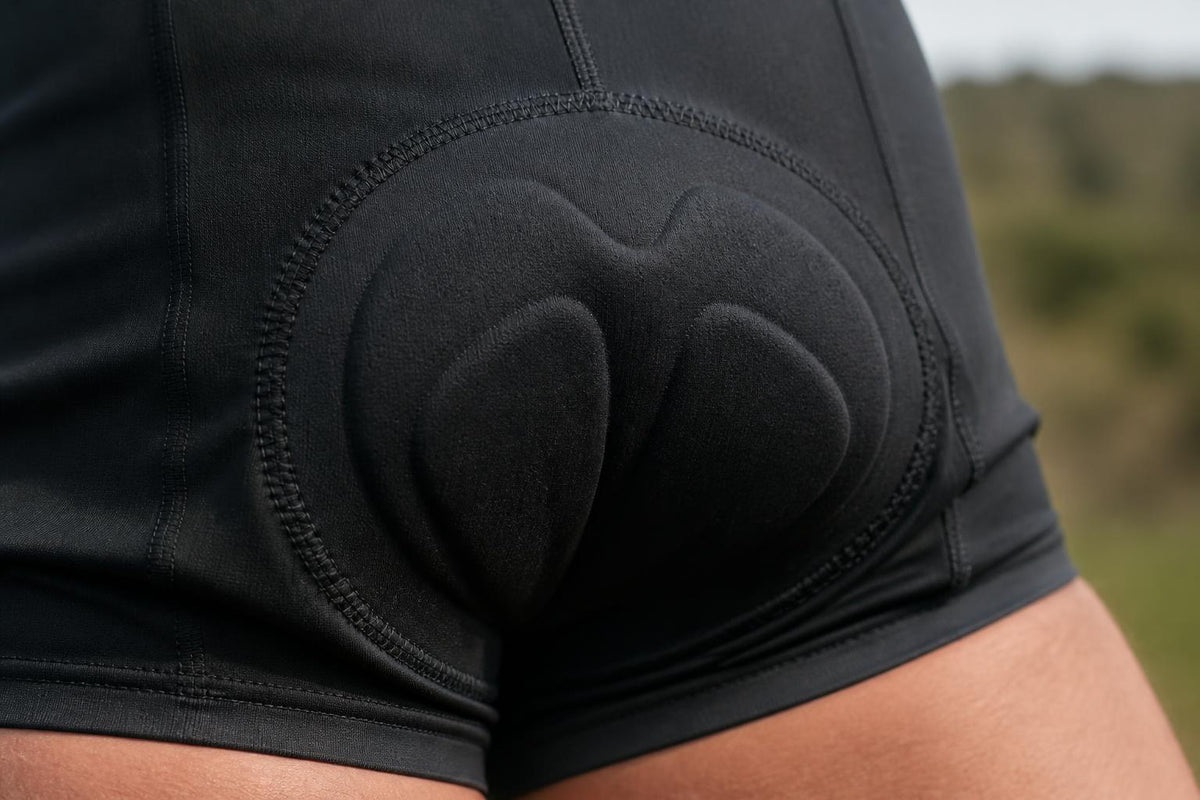
The right bib shorts should disappear once you are riding. You should notice support, stable leg grippers and a pad that sits where you need it, not constant tugging at the straps, pressure at the stomach or rubbing at the inner thigh. For longer rides, comfort usually comes from several small things working together, fit, fabric, panel shape and a chamois that matches the way you actually ride.
That matters even more when you are choosing women’s cycling bib shorts for ordinary UK riding rather than a short turbo session or a single café loop. A pair that feels fine for 40 minutes can become distracting after two hours if the straps creep, the leg finish bites or the pad is too bulky in the wrong place. In our Field Notes, we prefer to judge kit by what it does on the bike, in changeable weather, over repeated use.
What good bib shorts should feel like on the bike
A good pair of bib shorts should feel close-fitting and lightly compressive, but not restrictive. When you first pull them on at home, the straps may feel a little firm while you are standing upright. That is normal. Bib shorts are cut for a riding position, with your hips hinged and your upper body angled forward. The real test is how they settle once you are on the saddle.
On the bike, the shorts should stay put without you having to pull at the legs or adjust the pad after every junction. The chamois should sit flat against your body and stay centred as you pedal. You should not feel seams digging into the groin, bunching behind the knee or fabric wrinkling across the front of the hips.
The support should come from the whole short, not just a tight gripper at the hem. Well-cut panels hold the shorts in place through the thighs and seat so that the leg finish only needs to stop the hem riding up. If the gripper is doing all the work, it often shows up as an obvious band of pressure around the leg after an hour or two.
A useful rule is this. Standing comfort is not the goal. Riding comfort is. Bib shorts can feel slightly unusual when you first step into them if you are used to waist shorts, because there is no waistband to anchor your expectations. Once pedalling, that missing waistband is usually the point. There is less pressure across the stomach, less rolling at the waist and less need to keep hitching them up.
For recreational riding, social rides and steady weekend miles, good bib shorts should also feel predictable. You should know that after a café stop, a climb out of the saddle or a damp lane after rain, they will still sit properly. That consistency is often what separates shorts you keep reaching for from shorts that stay in the drawer.
How to judge fit, leg length and strap comfort
Start with size, but do not stop there. Brand size charts are useful for a first pass, especially for hip and waist measurements, yet bib shorts are not just about circumference. Torso length matters because the straps need enough tension to hold the shorts up without pulling too hard through the shoulders.
If you are between sizes, think about what kind of fit you actually want. For longer rides, many riders prefer a firm, second-skin fit rather than a relaxed one, because extra fabric can move and crease. But if you often find straps too short or leg grippers too tight, sizing up may be more comfortable than forcing a very compressed fit.
When you try bib shorts on, check these points carefully:
- The pad should sit snugly against the body with no obvious gap.
- The fabric across the seat should look smooth, not overstretched and shiny.
- The straps should lie flat and feel secure without digging into the shoulders.
- The front should feel supported but not compressed to the point of discomfort.
- The leg hems should sit evenly on both thighs without cutting in.
Leg length is partly preference, but it also affects comfort. A slightly longer leg can improve stability because there is more contact with the thigh, which helps stop the shorts shifting. It can also reduce the chance of the hem creeping upward on repeated pedal strokes. A shorter leg may suit riders who prefer less coverage in warm weather, but it needs a very good hem finish to stay comfortable.
Pay attention to where the leg hem lands. If it finishes exactly on a part of the thigh that is fuller or more sensitive, the pressure can become noticeable over time. A clean-cut hem or a wide, soft gripper usually feels better than a narrow, highly elastic band.
Strap comfort is often underestimated. The best bib straps disappear under a jersey. They should feel light, breathable and stable, not like braces pulling the shorts upwards. Wide mesh straps usually spread pressure better than narrow straps, particularly on longer rides. For women’s cycling bib shorts, upper section design also matters because the bib needs to work with the chest comfortably when you are bent forward, breathing hard or adding layers.
If you wear a sports bra and a base layer under your jersey, try to picture the whole system. A bib upper that feels fine on bare skin can feel crowded once you add a bra band, a vest and jersey pockets. In practical terms, that means avoiding bulky strap joins and thick front panels unless you specifically want more coverage.
If you are returning to cycling after time away, it can help to compare bib shorts against what has annoyed you in other kit. Waistband pressure, hems that ride up, straps that twist, pads that drift to one side. Naming the problem makes it easier to spot the solution.
Choosing a chamois for your usual ride length
The chamois is the part riders talk about first, but it only works properly if the short fits well around it. A premium pad in the wrong size short still moves, folds or rubs. Once fit is right, then it makes sense to look at shape, density and placement.
For shorter rides, perhaps an hour or a little more, many riders get on best with a relatively low-bulk pad. Too much thickness can feel awkward and overbuilt if you are mostly riding local loops, commuting or joining a relaxed social spin. A lighter chamois can feel more natural, especially if you stop often or spend time off the bike.
For steady weekend rides, where you are in the saddle for longer continuous periods, medium-density support is often the sweet spot. You want enough cushioning under the sit bones to reduce pressure build-up, but not so much material that the pad feels nappy-like or traps heat. The shape should support the contact points that matter while staying flexible through the pedal stroke.
For longer social rides, where pace is moderate but time in the saddle adds up, placement is just as important as thickness. A pad that is anatomically shaped for women should support the sit bone area without pushing unnecessary bulk too far forward. If the front of the chamois feels intrusive early on, it is unlikely to improve after a few hours.
Look for these signs when assessing a chamois:
- Density where your weight actually sits on the saddle.
- Smooth transitions between thicker and thinner sections.
- A top fabric that feels soft and dries reasonably quickly.
- Edges that taper rather than ending abruptly.
- Stitching that keeps the pad stable without creating ridges.
Do not assume that thicker always means better. On UK roads, where rides often include repeated stops, short climbs, rough surfaces and changing weather, a balanced chamois is usually more useful than the biggest one available. For many riders, comfort comes from support plus freedom of movement, not maximum padding.
Saddle choice and riding position still matter. If you are sitting on a saddle that does not suit you, bib shorts can only compensate so far. But once your bike fit is broadly sorted, the right chamois can make a noticeable difference to how fresh you feel in the final hour of a ride.
Which fabrics and features are worth paying for
Some details are worth the extra spend because they affect comfort every time you ride. Others are mostly marketing language wrapped around ordinary materials. We think it helps to focus on construction first.
Panel design matters because bib shorts need to move with your hips and thighs while keeping the pad stable. Fewer panels are not automatically better, and more panels are not automatically more advanced. What matters is whether the shaping follows the body cleanly without creating unnecessary seam lines in high-friction areas.
Seams are worth checking closely. Flat seams are generally preferable because they reduce rubbing. The placement matters as much as the seam type. A well-made short avoids putting prominent seams where they will sit directly under pressure from the saddle or where the inner thigh repeatedly brushes during pedalling.
Fabric quality shows up in three ways. Support, breathability and recovery. Support means the material holds its shape and gives consistent compression without becoming see-through when stretched. Breathability matters because overheating often feels like saddle discomfort before you realise the issue is trapped heat and moisture. Recovery means the fabric springs back after washing and repeated wear instead of going baggy through the seat.
Useful features include:
- Breathable mesh bib uppers that dry quickly.
- Leg hems that stay flat without aggressive silicone bands.
- A chamois securely integrated so it does not twist in the wash.
- Fabrics with enough density to remain supportive over time.
- Thoughtful upper construction that layers comfortably under a jersey.
What is less useful is vague language about speed, race DNA or revolutionary compression if it is not backed up by clear design details. For most riders, especially those buying for regular recreational cycling, the real performance upgrade is comfort you can rely on in normal use.
If you are browsing our cycling jerseys, bib shorts and tights, it is worth comparing the product description against these practical points rather than looking for the most dramatic claims. We also suggest checking current variant availability before settling on a size or colourway, as stock can change.
Some riders also like technical fibres in next-to-skin layers, including KYMIRA in the right context, but bib shorts still live or die by fit and construction first. A clever fabric cannot rescue a poor cut.
What to wear with bib shorts in typical UK conditions
In the UK, the most useful approach is simple layering. Start with the bib shorts and add only what the day actually needs. Overcomplicating the system often leaves you either too hot at the start or carrying kit you never use.
In mild conditions, bib shorts with a jersey may be enough. If you prefer a little extra next-to-skin comfort, add a light base layer under the jersey. This can help manage sweat and reduce the clammy feeling that sometimes makes riders think their whole kit is uncomfortable when the issue is really moisture sitting against the skin.
In cooler weather, a base layer becomes more useful. Choose one that fits close without bunching under the bib straps or jersey pockets. If you want a fuller guide to layering, our Field Notes on women’s thermal layers for comfortable everyday wear covers the basics without turning it into a kit list for alpine conditions.
For variable days, common in spring and autumn, think in removable pieces. Arm warmers, a gilet or a lightweight outer layer are often more practical than changing the whole lower half of your kit. Bib shorts can stay on for a surprisingly wide temperature range if your upper body is layered sensibly.
A few practical combinations work well for ordinary UK riding:
- Mild and dry, bib shorts, short sleeve jersey, optional light base layer.
- Cool start, bib shorts, base layer, jersey, arm warmers or gilet.
- Changeable and breezy, bib shorts, jersey, packable extra layer for descents and café stops.
- Cooler social ride, bib shorts with knee or leg coverage only if you genuinely run cold.
If you are shopping across categories, our women’s sportswear collection can help you compare layers that work across cycling and general training. That is often more useful than buying highly specific kit for every forecast.
One UK-specific point is road spray. Even when the air temperature looks fine, damp roads can make you feel cooler than expected, especially on longer rides. That does not always mean switching straight to tights. It may simply mean keeping the upper body drier and warmer with better layering.
How to make bib shorts last and when to replace them
Bib shorts wear out gradually, not all at once. Most riders notice the change as a vague drop in comfort before they spot visible damage. The fabric may still look acceptable, but the support can soften, the grippers may lose hold and the chamois can flatten enough to change how the ride feels.
Washing matters. Rinse or wash bib shorts soon after riding, especially after hot weather, indoor sessions or wet road spray. Sweat, salt and grime break materials down faster if they sit in the fabric. Use a cool or low-temperature wash, a gentle detergent and avoid fabric conditioner. Conditioner can affect moisture handling and elastic recovery.
A few care habits make a real difference:
- Turn them inside out before washing.
- Fasten anything nearby that could catch the fabric.
- Wash with other technical kit rather than heavy garments.
- Air dry away from direct high heat.
- Do not tumble dry unless the care label explicitly allows it.
Check the care label on the garment itself because construction and fabric blends vary. In the UK, that label is the one to follow for routine care. If a product is also sold more widely in Europe, the symbols may be familiar across markets, but your practical decision should still come from the garment’s own instructions.
Inspect bib shorts regularly in a few key places. Look at the seat fabric for thinning or shine, the leg grippers for waviness, the straps for loss of elasticity and the chamois for creasing or compression that no longer bounces back. Also check for stitching that has started to lift around the pad or inner thigh.
Replace them when the ride tells you to, not only when they look old. If you are getting more saddle discomfort on the same routes, finding the shorts shift around more than they used to, or noticing the pad no longer feels supportive after washing, they may simply be past their best.
That does not mean every pair needs replacing quickly. Well-made bib shorts that are washed carefully, rotated with other pairs and used for the kind of riding they were designed for can stay comfortable for a long time. But once support fades, no amount of loyalty to a favourite pair will bring it back.
At Fair Weather Runner, operated by Fleeta Limited, we keep coming back to the same test. Good bib shorts should help you forget about your shorts and get on with the ride. If the fit is right, the chamois suits your usual distance and the construction holds up after repeated washes, you are far more likely to finish longer rides still comfortable, and still willing to go again next weekend.
Should bib shorts feel tight at first?
Yes, they should feel close and supportive, but not restrictive. The fabric should sit smoothly without digging in, and the straps should stay in place without pulling hard on your shoulders.
Are bib shorts better than waist shorts?
Many riders find bib shorts more comfortable because they stay put without a tight waistband. That can reduce bunching and help the chamois stay in the right place during a ride.
How many hours should a chamois be comfortable for?
There is no universal number. Comfort depends on fit, riding position, saddle setup and the pad itself. It is more useful to match the chamois to your usual ride length than chase a marketing claim.
Do you wear underwear under bib shorts?
No. Bib shorts are designed to be worn next to the skin so the chamois can sit flat and reduce rubbing. Adding underwear usually creates extra seams and friction.
Can you wear bib shorts for indoor training as well?
Yes, but many riders prefer a lighter pair for indoor sessions because heat and sweat build up faster. Breathable fabric and a comfortable chamois still matter.