
How to choose men’s running socks that stay comfortable
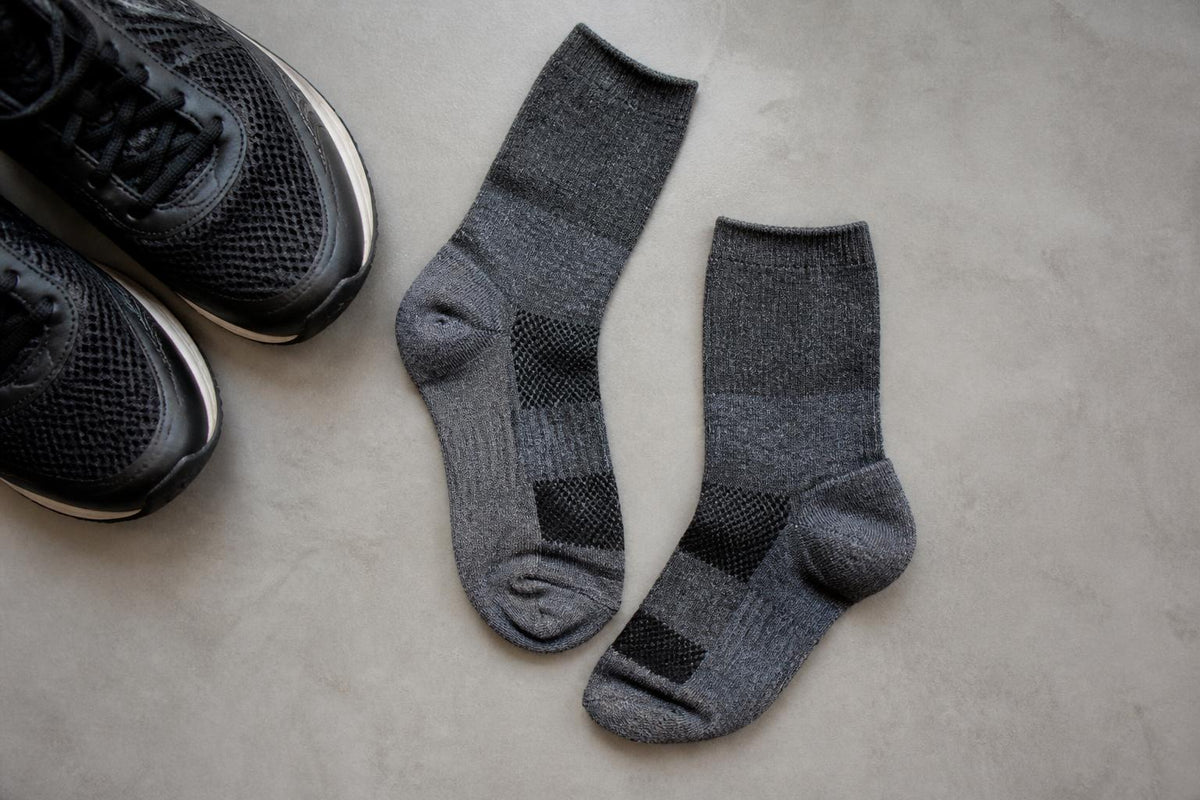
The best running socks are the ones you stop noticing a mile or two into the run. They stay in place, manage sweat, do not bunch at the toes, and do not leave you thinking about rubbing at the heel or pressure across the forefoot. For most everyday runners, comfort comes down to a few practical things, fit, fabric, cushioning, and the right height for the weather and your shoes.
That is especially true if you are deciding between ankle socks and men’s long running socks. Longer socks are not only about style. They can give more reliable coverage in cool weather, stop grit and vegetation catching your skin, and feel more secure on mixed routes. At Fair Weather Runner, our Field Notes are written for ordinary UK running conditions, where one week can mean dry pavements and the next can mean wet grass, drizzle, and a chilly breeze.
What makes a good pair of men’s running socks?
A good pair of running socks should feel shaped rather than generic. That starts with a close fit through the heel, arch, and forefoot. If the sock twists easily in your hand, or if the heel pocket sits too low or too high once on, it is less likely to stay comfortable on the move.
The next thing that matters is moisture management. Running socks need to move sweat away from the skin and dry reasonably quickly. Wet fabric softens the skin and increases friction, which is why a sock that feels fine when dry can become irritating halfway through a run. This is one reason proper running socks usually feel different from ordinary cotton sports socks.
Seams matter too. Toe seams do not need to be completely invisible to work well, but they should lie flat and not press into the ends or tops of the toes. A bulky seam can be enough to spoil an otherwise good run, especially if your shoes already fit closely.
Cushioning is useful, but only in the right places. Many runners do best with moderate padding under the heel and ball of the foot, where repeated impact and pressure build up. Too much thickness all over can make shoes feel tight, trap heat, and create movement inside the shoe. Too little can feel harsh on firmer roads or longer outings.
Elastic support around the arch and ankle helps a sock stay put. That does not mean it should feel restrictive. The aim is a secure hold that stops the fabric creeping down or folding. If you regularly have to tug your socks back into place after a few minutes, the construction is not doing enough.
For everyday running, durability also matters. The pressure points are predictable, heel, big toe area, forefoot, and the cuff if you pull socks on roughly. Good socks should cope with repeated washing and regular use without thinning too quickly. If you rotate pairs instead of wearing the same two on every run, they usually hold their shape better for longer.
If you are comparing options in our running socks collection, these are the details worth paying attention to first. Marketing terms matter less than whether the sock fits your foot, your shoes, and the conditions you actually run in.
How should running socks fit?
Running socks should fit closely, but not feel tight in the way compression kit can. You want a smooth, secure layer between foot and shoe, with no spare fabric at the toes and no slipping at the heel. When the fit is right, you should be able to forget about them once you start running.
A few common fit problems are easy to recognise.
If the sock feels loose at the toes, you may notice bunching under the forefoot or creasing across the toe box. That usually leads to rubbing. If the heel section rides up the back of your ankle or sits under your arch, the sock shape is wrong for your foot length or the size range is too broad. If the cuff leaves deep marks and feels uncomfortable long after the run, it is probably too tight for you, even if it does stay up.
Another issue is width. Some runners focus only on shoe size, but sock volume matters too. A heavily cushioned sock inside a close-fitting shoe can make the whole fit feel cramped. That pressure can show up as hot spots, numb toes, or a general sense that the shoe is wrong, when the real issue is the sock taking up too much room.
To avoid fit problems, match the sock not only to your foot size but also to the shoe you actually run in. A slim road shoe often works best with a thinner or medium-cushion sock. A roomier trail shoe or winter setup may suit a slightly thicker pair. Always try socks on with your usual running shoes rather than judging the fit in bare feet on the bedroom floor.
It also helps to trim toenails regularly and put socks on carefully. Twisted fabric at the toes or a heel section pulled off-centre can create friction before you even leave the house. Smooth the sock into place, make sure the heel cup is sitting where it should, and check that there are no folds around the arch.
If you are returning to running after a break, your feet may be less tolerant of poor fit than you remember. Small irritations become obvious quickly. That is a good reason to start with a few sensible pairs rather than a large bundle of whatever happens to be cheapest.
Which fabrics are best for different conditions?
For running in the UK, sock fabric needs to cope with variation. A cool morning can turn mild by mid-run, pavements can be dry while verges are wet, and winter often means repeated washing because kit does not fully dry between sessions. The best fabric is usually the one that balances moisture management, comfort, and temperature control in the conditions you actually see.
Synthetic blends are the standard choice for many runners. Polyester, nylon, and elastane blends are light, dry quickly, and hold their shape well. In warm weather, they are often the easiest option because they move sweat efficiently and do not stay damp for long. They also tend to be durable, which matters if you run several times a week.
Merino wool blends are useful in cool or changeable conditions. Good merino running socks do not feel like heavy hiking socks. When blended properly, they can regulate temperature well, feel comfortable against the skin, and stay wearable even if conditions turn damp. They are especially handy for autumn and winter runs, or for runners whose feet tend to feel cold early on.
Cotton is the fabric most runners are better off avoiding for regular runs. It absorbs moisture, dries slowly, and can become heavy or clammy. For a short walk or general gym use it may be fine, but for repeated footstrike and sustained movement it is usually not the best choice.
Mixed UK conditions are where blends make the most sense. A sock that combines synthetic fibres for durability and drying speed with a softer or more temperature-stable fibre can work across a wider range of runs. That is often more practical than owning completely separate socks for every month of the year.
If you are building a broader kit setup for cooler months, it also helps to think about how socks work with the rest of your clothing. A breathable sock can still feel too warm if the rest of your kit is overdressed. We often find runners get more from a balanced system, socks, shorts or tights, a suitable top, and a sensible base layer for cooler runs, rather than trying to solve everything with thicker socks alone.
Some runners also like technical fabrics in other accessories, including KYMIRA pieces for warmth management, but socks still need to be chosen first on fit and feel. If the fit is wrong, no fabric claim will rescue them.
Do you need thick, thin, short or long socks?
Most runners do not need one perfect sock for every run. They need two or three types that cover the conditions they actually face.
Thin socks are usually best for warm weather, close-fitting shoes, and runners who prefer a direct feel underfoot. They reduce bulk and can feel cooler, but they offer less protection if your shoes are firm or if you are prone to rubbing.
Medium-cushion socks are the safest starting point for everyday running. They suit mixed distances, ordinary road shoes, and the stop-start reality of many recreational runs. If you are not sure where to begin, this is generally the most forgiving option.
Thicker socks come into their own in colder weather, in roomier shoes, or for runners who simply prefer a softer feel. The trade-off is heat and volume. If your shoes already fit snugly, a thick sock can create pressure points rather than comfort.
Sock height is mostly about coverage, but coverage changes comfort. Short socks feel light and unobtrusive. They are a good choice in summer or for runners who dislike fabric on the lower leg. The downside is less protection from shoe collars, mud, wet grass, and changing temperatures.
Longer socks cover more skin and usually stay in place more securely over the calf or lower leg. For some runners that alone makes them more comfortable, especially on cooler mornings or mixed-surface routes. Men’s long running socks are also useful if you prefer not to have a gap between sock and tights or between sock and lower-leg accessories.
If you are layering for cooler weather, longer socks can work neatly with running arm sleeves for changeable conditions and other adaptable kit. The aim is not to dress heavily, but to keep exposure manageable when the weather is uncertain.
When are long running socks the better choice?
Long running socks are the better choice when coverage solves a real problem. In the UK, that often means cool starts, windy conditions, damp grass, muddy edges, or routes where low vegetation brushes the lower leg. They can also simply feel more settled if you dislike the exposed feeling of short socks in colder months.
One practical benefit is protection from rubbing higher up the shoe collar, especially if your shoes have a firm heel structure or if you wear leggings in winter. A longer sock creates a more continuous layer, which can reduce irritation where different fabrics meet.
They are also useful on mixed routes. If your run includes towpaths, park loops, light trail sections, or grassy cut-throughs, longer socks help keep dirt and small bits of debris off the skin. They will not replace proper trail gaiters, but for ordinary recreational running they often provide enough extra coverage to make the run more comfortable.
Temperature control is another reason. Long socks are not automatically hot. A breathable, well-fitted pair can be comfortable in a wider range of conditions than many runners expect. On cool mornings, they take the edge off without needing full winter kit. On changeable days, they can be the simple adjustment that keeps the rest of your clothing lighter.
Some runners also prefer the feel of longer socks for recovery and ease after the run. They can be easier to pair with tights, shorts, and layers when the weather is unsettled. If your running wardrobe already includes winter tops, gloves, or a base layer, longer socks often fit naturally into that setup.
For social runs and club sessions, they can also be the more practical option because they cope better with standing around before or after the run. That extra bit of warmth and coverage matters more than it does during the middle miles.
If your usual runs are short, dry, and firmly on the road in summer, you may not need them often. But if your running happens year-round, or you regularly head out in ordinary British weather rather than ideal conditions, men’s long running socks are often the pair that earn their place.
How many pairs do most runners actually need?
Most runners need fewer pairs than they think, but more than one or two. The right number depends less on ambition and more on how often you run, how often you wash kit, and whether you want a dry pair ready at short notice.
For beginners, three pairs is a sensible starting point. That gives you enough to rotate through the week without wearing damp socks from the previous run or washing one pair constantly. A simple setup might be two everyday pairs and one pair with different cushioning or height for cooler conditions.
If you run three or four times a week, four to six pairs is usually more realistic. That covers regular rotation, wet weather, and the fact that socks are often the first thing you notice if they are not fully dry or properly clean. Rotation also helps them last better than relying on the same favourites every time.
If you run year-round, it is worth having at least two categories. For example, lighter socks for warmer days and a few longer or slightly more protective pairs for cooler months. You do not need a drawer full of specialist options. You need a small set that matches your actual routine.
It is also sensible to retire socks when the fit goes, not only when there is a hole. Once the heel thins, the cuff loosens, or the fabric starts shifting inside the shoe, comfort usually drops before visible damage becomes dramatic.
For runners building a practical wardrobe, we think in systems rather than single miracle products. Socks, shorts or leggings, tops, gloves, caps, and cold-weather layers all play a part. That is the approach behind Fair Weather Runner and the wider range operated by Fleeta Limited, including running kit, cycling kit such as bib shorts, and practical accessories for training in real conditions.
If you want a useful next step, start with enough pairs for one full week of your normal running pattern, then add only when you can see a gap. That might be a need for more cushioning, a better option for winter, or a pair of longer socks that suit mixed conditions. Keep it simple, and your feet usually tell you the rest.
Are men’s long running socks better than ankle socks?
Not always. Long socks give more coverage and can feel better in cooler weather or on rougher routes, while ankle socks feel lighter and cooler. The better choice depends on comfort, weather and what works with your shorts, leggings and shoes.
Should running socks be tight?
They should feel close-fitting rather than tight. A good pair stays in place without digging in, restricting movement or leaving strong pressure marks. If the fabric bunches at the toes or heel, the fit is probably wrong.
Can I use normal cotton socks for running?
You can, but many runners find purpose-made running socks more comfortable because they manage moisture better and are less likely to rub once the run gets warm or damp.
Do thicker socks prevent blisters?
Not automatically. Blisters usually come from a mix of friction, moisture, fit and movement inside the shoe. Some runners prefer more cushioning, but the right fit and fabric are usually more important than thickness alone.
What sock length works best in winter?
Many runners prefer crew or longer socks in winter for extra coverage around the ankle and lower leg. The best option still depends on temperature, wind, rain and how warm your legs usually feel when running.