
How to choose running compression socks for everyday miles
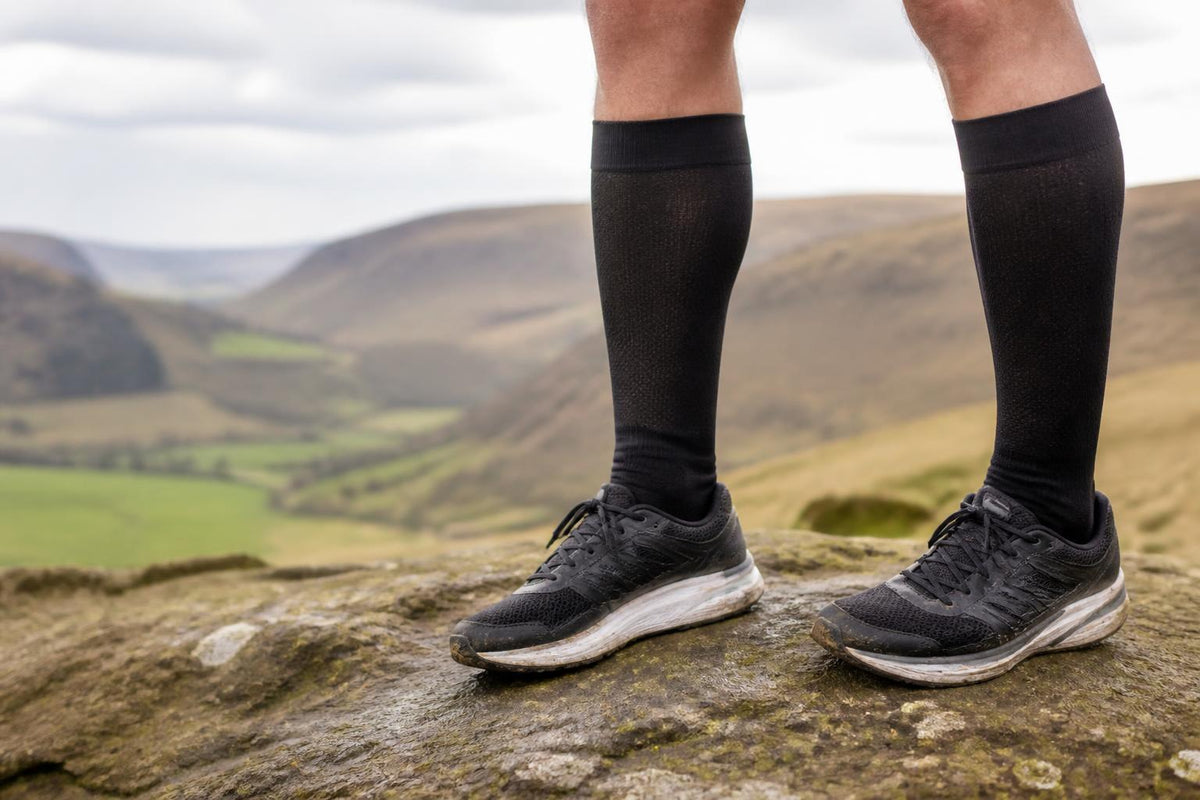
If you are choosing compression socks for regular running, start with the boring part, fit. A sock that is too tight at the calf, too loose at the arch, or bunching at the toes will be more noticeable than any claimed benefit. For everyday miles, most runners do best with a pair that feels secure and supportive, stays put when damp, and works with the rest of their kit in ordinary UK conditions.
That matters because compression socks sit in a crowded part of the market. Some runners swear by them for long runs, cool starts and recovery between sessions. Others simply prefer the feel. Both are reasonable. What matters is choosing a pair on practical grounds, not assuming every technical claim will show up on your Tuesday 5K. If you are comparing running compression socks in the UK, we would focus on fit, fabric, comfort over an hour or two, and how well they cope with wet roads, repeated washing and the usual stop-start reality of recreational running.
What running compression socks are actually for
When runners talk about compression socks, they usually mean knee-high or near knee-high socks made with a firmer, more supportive knit than standard running socks. Some are built with graduated compression, meaning the pressure is intended to be firmer lower down and less firm higher up the leg. Others are simply snug, supportive socks marketed in compression styling.
In practical terms, runners tend to buy them for four reasons.
First, they want a close, held-in feel around the foot, ankle and calf. Some people like that sense of structure, especially on longer runs or when their legs feel a bit heavy.
Second, they want coverage. A higher sock gives more warmth on cold mornings and a little more protection from road spray, light trail debris and brambles at the edge of mixed routes.
Third, they want consistency. A well made compression sock should stay in place better than a loose, everyday sports sock. If you are stopping at crossings, jogging to a group run, or commuting in your kit, that matters more than marketing language.
Fourth, some runners use them because they believe they help with fatigue during or after running. This is where caution is sensible. Compression garments are widely used in sport, but personal response varies, and strong claims about performance, injury prevention or medical benefit should be treated carefully unless they are backed by clear manufacturer evidence. We do not treat running socks as a substitute for medical advice, and we would be wary of any brand that blurs the line between sportswear and treatment.
For ordinary recreational running, the simplest view is usually the best one. Compression socks may help you feel more supported and more comfortable, particularly on longer or cooler runs. They may also be a poor choice if you dislike firm clothing or if the fit is wrong. The right question is not “Do they work for everyone?” It is “Do they feel right for the sort of running I actually do?”
If you are still deciding between standard and more supportive socks, our guide to men’s running socks that stay comfortable covers the broader features that matter whichever style you choose.
How compression socks should fit
Fit is where most good decisions are made.
Start with the size chart from the manufacturer, and do not assume your usual sock size tells the whole story. Compression socks need to fit both the foot and the calf. A foot that is too small for you will pull the sock down and crowd the toes. A calf section that is too tight may feel restrictive and become annoying long before the end of the run.
For the foot, look for a close fit through the heel and arch. The heel cup should sit where your heel actually is, not halfway up the back of your foot. The fabric across the top of the foot should lie smooth, without ridges or loose folds. At the toes, you want enough room to splay naturally, but not so much spare fabric that it creases inside the shoe.
For the calf, the sock should feel firm, not harsh. You should notice the support, but it should not feel like a struggle to bend your ankle or settle into your stride. If you are left with deep marks, numbness, pinching at the top band or a strong urge to pull them off after ten minutes, that is not a good fit.
Length matters too. Some runners want a full knee-high sock. Others prefer a slightly shorter rise that still covers most of the lower leg. The right length depends on your height, calf shape and what you want from the sock. A taller runner in a one-size style may find the top band sits lower than expected. A shorter runner may find a long sock bunches behind the knee. Neither is ideal.
When trying a pair on at home, walk around in them before you run. Then test them on a short, ordinary session, not your longest run of the month. Notice five things.
One, do they stay up without constant adjustment?
Two, do the toes stay comfortable once your feet warm up?
Three, does the fabric feel manageable when damp?
Four, do they rub at the Achilles, shin or top band?
Five, do they still feel fine after the run, when you are no longer distracted?
That last point matters. A sock can feel impressive for the first mile and irritating by the time you are making tea.
If you are between sizes, be cautious about sizing down just to get “more compression”. More pressure is not automatically better. For everyday miles, a secure and wearable fit is usually the better choice than the tightest one you can force on.
When they make sense for UK running
UK running conditions are a good match for supportive, higher coverage socks, but only in the right situations.
Cool mornings are the obvious one. In much of the year, especially spring and autumn, the first ten minutes of a run can feel colder than the rest. Compression socks can take the edge off that without needing full tights. If your route starts with exposed streets or open park paths, that extra coverage can be welcome.
Wet weather is another practical case. No sock keeps you dry once water gets in, but some fabrics manage damp conditions better than others. A supportive sock that stays put, does not collapse when wet, and does not turn baggy after repeated washing can be a useful part of a UK running drawer. This is less about “waterproof” claims and more about keeping friction under control.
Longer runs are where many runners notice the difference most clearly. If you are out for an hour or more, or building back up to steadier weekend mileage, the appeal of a sock that feels stable and consistent becomes clearer. That does not mean you need compression for every long run, but it is a common reason people choose it.
They also make sense for commuting to runs and social running. If you jog to a club session, stand around for a few minutes before setting off, or head home by train or car afterwards, a knee-high sock can feel more practical than a no-show style. You get warmth, coverage and less fuss. For ordinary recreational use, that convenience counts.
Where they may be less necessary is hot weather, very short runs, or sessions where you know you prefer a lighter, less structured feel. On a warm summer evening, a thin ankle sock may simply be more comfortable. The point is not to dress like every run is a race or a recovery protocol. It is to choose kit that suits the conditions and the distance.
For UK runners, this is also where expectations should stay grounded. Sports compression garments sold here are consumer products, not medical devices, unless they are specifically marketed and regulated as such. If a product makes technical claims, check whether the brand explains what those claims mean in plain language and whether it provides evidence worth reading. Broad wellness language is not the same thing as proof.
If your usual running calendar includes damp pavements, chilly starts and steady conversational miles, compression socks can earn their place. If not, they may still be enjoyable, but they are not compulsory kit.
What to compare before you buy
Once fit and intended use are clear, compare the construction.
Fabric comes first. For running, we would usually favour technical synthetic blends that manage moisture, dry reasonably quickly and hold their shape after washing. Some runners like merino blends for cooler conditions, but with compression styles the knit structure and recovery of the fabric matter at least as much as the fibre list. Read beyond the headline material.
Next, check the seams. Toe seams are often the first thing you notice on the run. A flatter, lower-profile seam is usually more comfortable than a bulky join, especially if your shoes are already quite precise in the forefoot.
Look at cushioning. Compression socks are not all thin. Some have targeted padding at the heel, toe or underfoot. That can be useful on longer runs or rougher surfaces, but too much bulk may alter shoe fit. If your shoes already feel snug, a heavily cushioned sock may be the wrong choice.
Breathability matters more than many people expect. A supportive sock still needs to let heat and moisture escape. Ventilation zones, lighter knit panels and sensible fabric choices all help. This is especially relevant if you run warm or use compression socks outside winter.
Durability is worth checking because compression relies on the fabric keeping its elasticity. A sock that starts firm and quickly goes slack is poor value however good it looked out of the packet. Signs of better durability include a well-finished cuff, consistent knit density, reinforced high-wear areas and clear washing instructions.
On washing, keep it simple and consult The Eco Edit to follow the care label. In most cases that means a cool or moderate wash, avoiding excessive heat, and letting them air dry rather than cooking the elasticity in a tumble dryer. Compression garments tend to last better when treated as technical kit, not thrown in with towels on a hot cycle.
Then there are technical claims. If a manufacturer talks about graduated compression, infrared textiles, recovery benefits or advanced body temperature effects, ask two questions. Is the claim explained clearly, and is there evidence behind it from the manufacturer that goes beyond a slogan? Some brands, including KYMIRA in relevant product categories, may provide more detail than others. That does not mean every claim will matter to every runner, but it is worth comparing substance against sales language.
For a practical starting point, our running socks collection is where we group the styles runners most often compare for everyday comfort, support and coverage. If your focus is longer steady mileage rather than short sharp sessions, our Field Notes on running socks that stay comfortable for longer distances is also useful, even if you are nowhere near a marathon.
How to build the rest of your kit around them
Compression socks work best as part of a sensible kit setup, not as a magic upgrade on their own.
Start from the weather. In cool conditions, a good sock pairs well with shorts and a light base layer, or with leggings if you prefer more coverage. For many UK runners, that combination is enough for much of autumn and spring. You do not need to overcomplicate it.
If you tend to feel cold early in the run, add a light top or fleece that can cope with the first mile without becoming a nuisance later. If your hands go first, gloves often make a bigger difference to comfort than changing the rest of your clothing. On grey, drizzly mornings, a cap can also be more useful than people expect, especially for keeping rain out of your eyes and helping you settle into a steady rhythm.
That is why we usually suggest looking at the whole system. A firm sock can help your lower legs feel more covered and settled, but if the rest of your kit is wrong for the conditions, the run will still feel off. Our running and training clothing range is arranged around that practical idea, everyday layers that work together rather than chasing one headline feature.
For wet, windy or changeable conditions, think about transitions. Are you driving to the start, jogging to meet friends, or cooling down on the way home? Compression socks often make most sense when there is a bit of standing around before or after the run. In those cases, a cap, gloves and a light extra layer can make the whole setup feel much more considered.
Arm coverage is another useful variable. If you like shorts for freedom of movement but want a little extra warmth, arm sleeves can be a tidy solution without committing to a heavier top. That can work particularly well on social runs where the pace is easy and the weather shifts mid-session. We keep running arm sleeves in the same practical category of adaptable kit.
It is also worth being realistic about what you do not need. If you are heading out for a straightforward 30 to 45 minute run, you probably do not need to dress like an ultra runner. Socks, shorts or leggings, a suitable top, and simple weather protection are enough. Compression is there to improve comfort if it suits you, not to turn every run into a gear exercise.
Because we are an online shop operated by Fleeta Limited, we also keep our advice grounded in what runners can actually use day to day. In Field Notes, we write for the Fair Weather Runner who wants kit that earns its place. That means no assumption that every runner wants race-day marginal gains, and no assumption that every wardrobe needs specialist extras borrowed from cycling, such as bib shorts, when the run itself calls for something simpler.
The best approach is to build from your most common run. If that is a couple of weekday miles before work and a longer social run at the weekend, choose compression socks that feel good in that pattern. Then add the layers that solve the problems you genuinely have, cold hands, wet hair, exposed arms, damp starts, rather than the ones that only sound impressive on a product page.
For most runners, that is how useful kit decisions are made. Quietly, practically, and with enough honesty to say when a standard sock would do just as well.
Do running compression socks stop injuries?
No sock can promise that. Compression socks may feel supportive and comfortable for some runners, but they are not a guaranteed way to prevent injury.
Should compression socks feel tight?
Yes, but only to a comfortable degree. They should feel snug and even, without pinching, numbness, sharp pressure or marks that suggest the fit is wrong.
Are compression socks worth it for short runs?
They can be, especially if you prefer a close supportive feel. For short runs, comfort, temperature control and avoiding rubbing usually matter more than marketing claims.
Can beginners wear running compression socks?
Yes. Beginners can wear them if the fit is right and the feel suits them. They are an optional kit choice, not something every new runner must buy.
What should I wear with compression socks in winter?
Build around the weather: suitable shorts or leggings, a base layer if needed, and practical extras such as gloves or headwear for cold or wet UK conditions.