
Reflective kit that helps you stay seen on UK runs
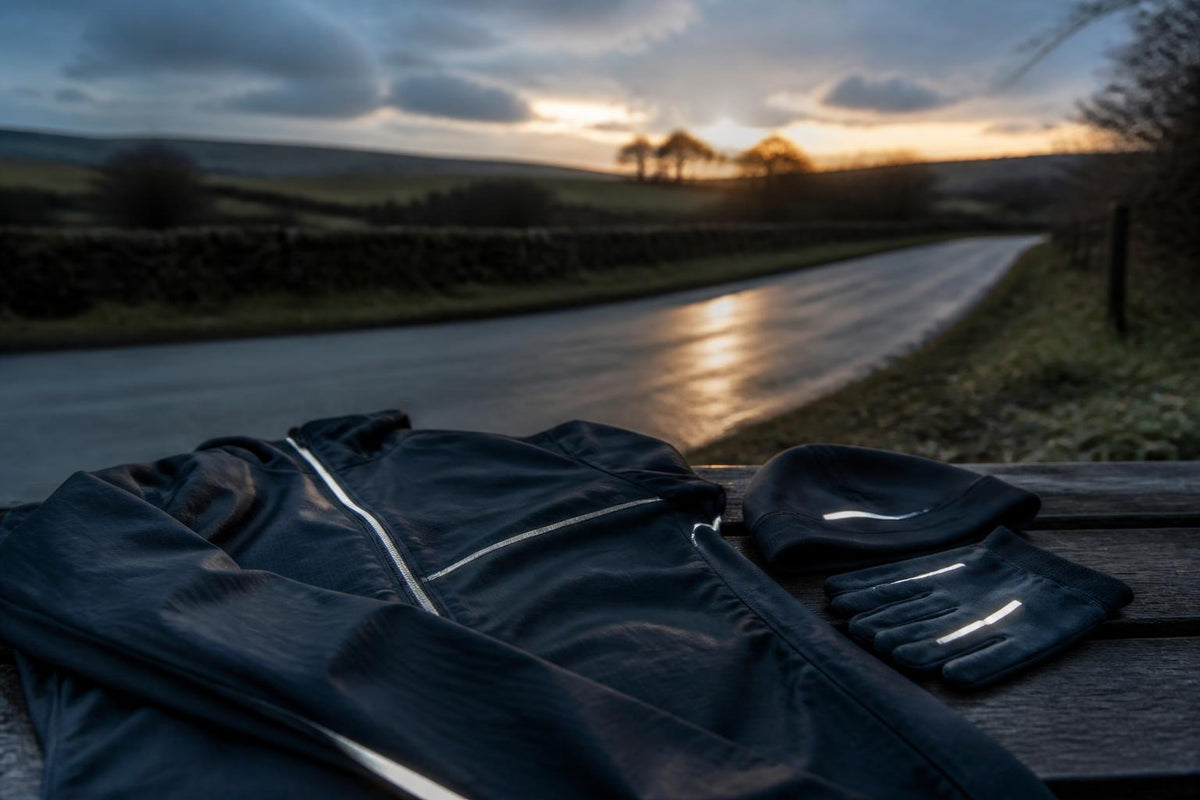
If you run in the UK through autumn, winter, early mornings or late evenings, reflective kit is not a nice extra. It is one of the simplest ways to make yourself easier to spot by drivers, cyclists and other path users before they are close to you. Good reflective running accessories do not light the road for you, and they do not replace paying attention, but they do help your movement stand out when car headlights, street lighting and wet surfaces make people harder to pick out.
For most everyday runners, the best place to start is not a full wardrobe change. Small items that sit on the hands, head and arms often give you a useful visibility boost straight away, and they are easy to wear with kit you already own. That matters if you are building up a practical running setup rather than buying for race day photos.
What reflective kit actually does on a run
Reflective material works by bouncing light back towards its source. On a run, that usually means vehicle headlights, bike lights or stronger street lighting. The effect is most useful when somebody else is looking in your direction from a distance and your outline would otherwise blend into the background.
That is why reflective details matter so much on UK roads and pavements in poor light. On a dry, bright afternoon, your ordinary top and leggings may be easy enough to see. On a wet November evening, with dark hedges, parked cars, bus stops, road spray and glare from oncoming traffic, it is much easier for a runner to disappear into the scene. Reflective trim helps break that up.
It is especially useful in the places many of us actually run, rather than in ideal conditions. Think about:
- residential streets with parked cars and patchy lamp coverage
- pavements beside faster roads
- shared paths where cyclists approach quickly
- canal paths and greenways near road crossings
- country lanes with little or no street lighting
- winter club or social runs that start in daylight and finish in dusk
What reflective kit does not do is make you self-illuminating. If there is no light hitting it, there is less for it to return. That is why reflective details and active lighting do different jobs. A reflective cap or glove helps others see you when their light catches it. A torch or wearable light helps you see the route and can help others notice you sooner. On darker routes, the two work best together.
In UK conditions, placement and movement matter as much as total square coverage. A small reflective panel on a moving wrist can catch attention more effectively than a larger static patch hidden under a gilet strap or the back of a jacket. When we compare accessories, we look at how they behave in real use, not just how bright they appear under product photography.
Which reflective accessories are most useful first
If you are beginning or returning to running, start with the accessories you are most likely to wear every time. The first purchase should be practical enough that it becomes routine.
For many runners, the best first options are:
- a cap or headband with reflective detailing
- gloves with reflective elements
- arm sleeves with visible reflective sections
- smaller essentials such as a belt, pouch or carry item with reflective trim, if you already run with one
A cap is useful because it sits high on the body and stays visible above darker tops or jackets. It also earns its place in the UK by helping with drizzle, low sun and general comfort. If you want one item that works across several seasons, a reflective running cap or headwear option is often a sensible start.
Gloves are another strong first buy. Hands move naturally while you run, which helps reflective details catch attention. They also solve a very ordinary problem, cold hands making a run less comfortable than it needs to be. That combination of visibility and comfort is exactly what makes a piece of kit worth owning. We keep coming back to running gloves with practical low light use because they are easy to add without changing the rest of your setup.
Arm sleeves are often overlooked by newer runners, but they are one of the most flexible additions. They sit on a moving part of the body, they can be added or removed more easily than changing tops, and they work well in the in-between conditions that define so much UK running. If your usual top is plain or dark, arm sleeves that add visible detail can make a noticeable difference without forcing you into a heavier outer layer.
What should come later? Usually full outfit replacement. If your current base layer, top or leggings fit well and keep you comfortable, you do not need to discard them immediately. Build around them first with accessories that improve visibility where it counts.
How to choose for town streets, lanes and social runs
The right choice depends on where and how you usually run. A short evening loop through lit streets calls for a different balance from a weekend run on unlit lanes.
For town and suburban streets, reflective accessories on the upper body and hands are often the most useful first step. Street lighting means there is usually some light around, but visual clutter is the issue. Drivers are scanning for other cars, crossings, bins, parked vehicles and people stepping out. Reflective details that move, especially on wrists, forearms and headwear, help you stand out from the background.
For darker lanes or less lit mixed routes, step up both visibility and weather protection. Gloves, cap and sleeves can all work together here, especially if the rest of your clothing is not especially bright. If you run on roads without pavements, be realistic. Reflective details help, but route choice, timing and carrying a light matter as well. In the UK, the Highway Code guidance on road use and pedestrian visibility is the relevant frame of reference, rather than broader EU conventions.
For social runs and club meetups, think about side visibility as well as front and back visibility. People in a group can become a single dark mass from a distance, particularly on country roads or park paths. Reflective details spread across several runners at different heights and positions are more useful than everyone relying on one bright patch on the centre back. Accessories help here because they vary the points of reflection around the group.
Weather should also influence your choice. In dry cold conditions, arm sleeves and gloves may be enough. In wind and rain, reflective details can disappear under outer layers unless you plan for it. If your reflective item is likely to be covered by a waterproof, it is not doing much. This is where a cap, outer glove detail or visible sleeve section becomes more important.
For runners who prefer understated kit, there is no need to dress like a marshal. A few well-placed reflective accessories can be more effective than one oversized feature in the wrong place. The goal is to be noticed early and clearly, not to wear the maximum possible amount of silver print.
Where reflective details should sit on the body
When you compare kit, placement matters more than many product descriptions admit. Reflective details are most useful where they are visible from common approach angles and where body movement helps attract attention.
The first places to look are:
- hands and wrists
- forearms
- shoulders and upper chest
- headwear
- lower legs, if visible below outer layers
Movement is the reason gloves, sleeves and some cap details work so well. Running creates a repeated motion pattern. That movement is recognisable even before somebody fully identifies you as a runner. A reflective strip on a swinging arm can catch the eye sooner than a static logo on the stomach.
Height matters too. Details higher on the body are more likely to remain visible over parked cars, hedges and roadside furniture. That is one reason headwear can be useful on urban runs. Lower down, reflective features on leggings or socks can work well, but only if they are not hidden by longer tops, bad weather layers or mud splash.
Front, side and rear visibility all deserve a quick check. Many runners think first about being seen from behind by drivers approaching in the same direction. That matters, but so do side angles at junctions, driveways and crossings. If your route includes mini roundabouts, side roads and estate turns, side visibility may matter just as much as rear visibility.
This is also why we prefer to think in combinations rather than single miracle items. A reflective glove plus a cap, or sleeves plus visible detailing on a top, usually gives you better all-round coverage than one accessory working alone.
How reflective accessories fit with the rest of your running kit
Reflective accessories work best when they are chosen as part of a full setup, not as isolated add-ons. The question is not just, “Is this reflective?” It is, “Will this still be visible when I am dressed for the weather I actually run in?”
Start with your base layer. In cold conditions, a fitted base layer is often the foundation that keeps you comfortable enough to run regularly. Over that, you may add a long sleeve top, fleece or light outer layer. If every visible outer surface is dark and plain, then accessories need to do more of the visibility work.
That is where caps, gloves and sleeves are useful. They sit outside the core clothing system and stay visible even when you layer up. If you are browsing running and training clothing for cooler UK conditions, it helps to think about which areas remain exposed once you are fully dressed, then add reflective details there.
Leggings and shorts also affect what accessories make sense. In milder weather, training shorts with visible lower legs leave more opportunity for reflective socks or lower leg detail to be seen. In winter leggings, the lower body may become a single dark block unless there is contrast elsewhere. That often shifts the importance back to the upper body and hands.
If you use arm sleeves, they can bridge a useful gap between summer and winter kit. They pair easily with short sleeve tops in cool conditions and can also sit with a lighter long sleeve setup when a full heavier layer would be too much. Some runners also like them for social runs where the temperature changes over the session.
The same practical logic applies across our wider range. We stock everyday running pieces, not fantasy kit lists. That includes caps, gloves, socks, leggings, training shorts and tops, along with accessories such as reusable gel flasks and insoles. We also carry cycling kit including jerseys, bib shorts and bib tights, but for this subject the key point is simple. Reflective accessories should fit around the clothing system you already use for regular runs.
You may also see technical fabrics such as KYMIRA mentioned on some product pages where relevant. The important thing here is still function in use. Comfort, layering and visibility have to work together. A reflective detail that irritates your wrist or a cap that overheats you will spend more time in a drawer than on a run.
What to check before you buy and how to look after it
Before you buy, check the basics in the same order you would judge any regular-use running kit.
First, fit. Gloves should allow normal hand movement and not bunch at the fingertips. Caps should stay put without pressure points. Arm sleeves should feel secure without cutting in or sliding down once you warm up. If an accessory shifts constantly, the reflective benefit becomes secondary because you will stop wearing it.
Second, visibility where it matters. Look at the actual position of the reflective areas, not just the fact they exist. Are they on a part of the item that stays visible in use? Will your jacket cuff cover them? Will your longer sleeve hide the arm detail? A reflective logo tucked into a fold is less useful than a smaller panel placed on an exposed moving area.
Third, comfort in UK weather. Breathability, rain handling and layering compatibility matter. A winter glove that is too warm for most of your runs is not practical. A cap that holds too much water in steady drizzle may become annoying. Think about the conditions in which you usually run, not the most dramatic conditions you imagine.
Fourth, care. Reflective finishes and prints can degrade if they are washed harshly or dried with too much heat. Always check the care label on the specific item. In general, washing cool, avoiding aggressive fabric conditioner where not advised, and air drying will usually help preserve both fabric performance and reflective detailing. Mud and road grime should be cleaned off rather than left to sit, especially through winter.
Fifth, durability. Look at seams, stretch recovery and fastening quality. Small accessories are handled a lot. Gloves are tugged on and off. Caps get stuffed into bags. Sleeves are rolled and unrolled. Durability matters just as much as the first impression out of the packet.
It is also worth keeping your expectations realistic. Reflective accessories improve how visible you are when light hits them. They do not replace route awareness, crossing carefully, or adjusting your setup for dark rural roads. On some runs, adding a light will still be the sensible choice.
At Fair Weather Runner, our Field Notes are there to help with that sort of decision. We focus on the practical end of running kit, what gets worn, what works in ordinary UK conditions, and what fits into a real weekly routine. The shop is operated by Fleeta Limited, and the same approach carries across the range. Before making a specific choice, check the current product page for available colours, sizes and variants, because visibility details can differ between options.
If you are building your setup from scratch, start small and wear it often. A reflective cap, a pair of gloves, or arm sleeves you actually use on dark evening runs will do more for you than a larger purchase that never leaves the cupboard.
Do reflective accessories work in daylight?
They are most useful when light from headlights, street lighting or bike lights hits them. In daylight, bright colours and clear contrast usually do more for visibility.
Are reflective accessories enough on their own?
Often not. A small reflective item can help, but visibility usually improves when you combine accessories with well-chosen clothing layers and sensible route choices.
What should I buy first for winter running?
Start with the items you will wear most often, such as gloves, headwear or arm sleeves with reflective details, then build around your usual cold-weather kit.
Is reflective kit only for road running?
No. It can also help on shared paths, canal routes and park edges where cyclists, other runners or vehicles may need to spot you in poor light.
Can I wash reflective running accessories normally?
Check the care label first. Gentle washing and avoiding harsh heat usually helps reflective finishes last longer, but exact care depends on the product.