
How to choose insoles that make running more comfortable
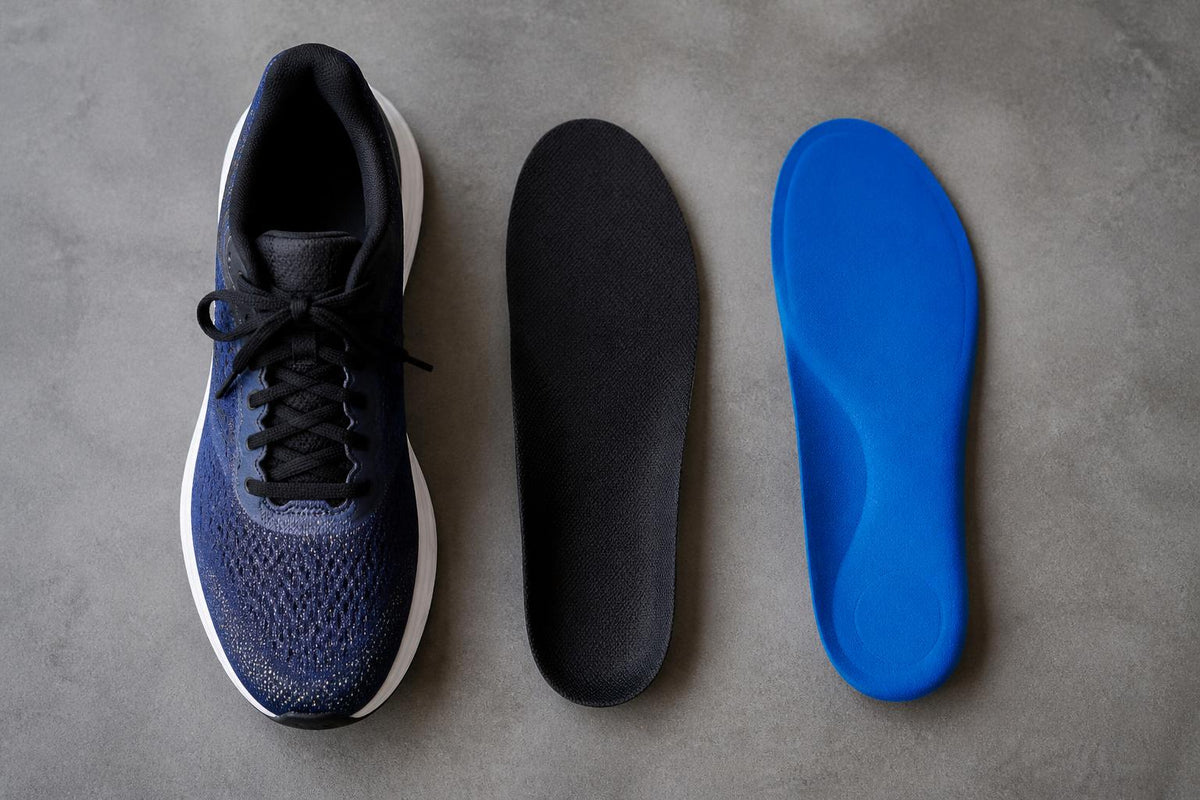
The right insoles can make running shoes feel more comfortable, more secure and more consistent underfoot, but they do not turn the wrong shoe into the right one. For most recreational runners, the best upgrade is usually a simple one, replacing a flat, tired stock liner with an insole that suits the shape of the foot and the volume of the shoe.
That matters because comfort on an easy 5K, a social run or a weekend long run usually comes down to small things. A heel that lifts slightly. A forefoot that feels cramped after half an hour. A footbed that has gone smooth and flat. Choosing well means looking at fit, shape, thickness and firmness, then fitting the insole properly so the shoe still holds the foot safely.
What running insoles actually change
Insoles change the interface between your foot and the shoe. That sounds minor, but it affects several things you notice straight away.
First, they change step-in feel. Some insoles feel soft and cushioned from the first wear. Others feel firmer and more structured, with less sink and a more defined shape under the arch and heel. Neither is automatically better. It depends on what your shoes already feel like and what kind of comfort you prefer for ordinary running.
Second, they change how the shoe fits. A thicker insole takes up more internal space. That can improve hold if your shoe feels a touch roomy, especially around the heel or midfoot. It can also create problems if the shoe already feels close over the toes or across the top of the foot. This is one of the most common reasons people buy insoles, then decide they do not work. The issue is not always the insole itself. It is often that the volume no longer suits the shoe.
Third, insoles change pressure distribution. A stock liner that has flattened out can leave you feeling more of the shoe’s base in one or two spots, especially under the heel, ball of the foot or arch area. A fresh insole can make that contact feel more even. That does not mean it is a medical device or an injury solution. It simply means the footbed can feel more supportive, less patchy and more comfortable over distance.
Fourth, they alter shoe feel. Running shoes are built with a certain ride in mind, but the insole still has a noticeable effect. A soft, flexible insole can make the shoe feel slightly more forgiving. A firmer one can make it feel more stable and more connected to the platform underneath. If you like a light, direct feel for shorter runs, you may not want to add much thickness. If you want a bit more comfort for steady miles, a more substantial insole can help.
That is why we usually suggest thinking about insoles as a fit and comfort tool first. If you are comparing options, our range of running insoles is best judged by shape, depth and feel, not by big promises.
How to tell whether your current shoes need different insoles
The clearest sign is often wear. Take the stock liner out of the shoe and look at it on a flat surface. If it has gone noticeably smooth, compressed or skewed, it may no longer be doing much beyond covering the strobel board underneath. A liner that started with some contour can become almost paper-flat after regular use.
Look as well for visible heel wear. If the top fabric has rubbed through at the heel, or if there is a permanent dent where the heel sits, the insole may no longer be giving a clean, stable contact point. You might notice this as a slightly sloppy feel at the back of the shoe, even when the upper itself is still in good condition.
Pressure points are another useful clue. If one area underfoot always feels harsher than the rest, especially in a shoe that otherwise still fits well, the stock footbed may simply be too thin or too tired. A better insole can smooth out that feel. The same applies if the arch area feels oddly empty, not painful but vague, as though the foot is sitting on a flat shelf.
Heel slip can also point to the insole. If your laces are already adjusted properly and the shoe is not obviously too long, a slightly deeper heel cup or a little more volume underfoot can improve hold. This is common with runners whose shoes fit well in length but feel a touch open around the rearfoot.
On the other hand, cramped toes are a warning sign to be careful. If your current shoes already feel snug in the forefoot, adding a thicker insole may make them worse. You may feel extra pressure over the toenails, less room to splay the toes, or more rubbing at the little toe side. In that case, the answer may be a lower-volume insole, or no insole change at all.
Check the lacing area too. If you are having to loosen the shoe more and more to relieve pressure on the top of the foot, the internal height may already be marginal. A replacement insole that sits higher can make that worse.
It is also worth separating shoe age from insole age. Sometimes the insole is tired before the rest of the shoe. Sometimes the whole shoe is past its best, and changing the liner only masks that for a short while. If the midsole feels flat, the upper has lost structure and the outsole is heavily worn, a new insole is unlikely to restore the shoe properly.
Choosing the right shape, thickness and support
For everyday recreational running, the starting point is usually volume. Low-volume insoles suit shoes that already fit quite closely, or feet that need to preserve as much toe room as possible. They are often the safer option if you like your current shoe but the stock liner has worn out. They tend to change the fit less dramatically.
Higher-volume insoles suit shoes with a little spare room inside, or runners who want a more substantial underfoot feel. They can improve hold in a shoe that feels just slightly generous. The trade-off is that they are much less forgiving in a snug-fitting upper.
Arch shape matters more than arch height labels alone. A foot can dislike an insole not because the arch is too high, but because the shape is in the wrong place. The support should meet the arch naturally rather than feeling like a lump under the middle of the foot. If you stand on the insole outside the shoe and immediately feel pushed into an awkward spot, that shape is unlikely to disappear once you start running.
Heel cup depth is another practical detail. A deeper heel cup can help centre the heel and make the rear of the shoe feel more secure. Many runners notice this as a cleaner fit rather than a dramatic change. If your heel tends to move about slightly, this can be useful. If your shoe already has a very structured heel and close fit, you may not need much extra depth.
Firmness is where personal preference comes in. Softer is not always more comfortable on the run. Very soft insoles can feel pleasant indoors, then less convincing once you are moving because they compress quickly and give a slightly vague feel. A moderately firm insole often feels more consistent over several miles. That is one reason many runners end up preferring something with a bit of structure for ordinary training.
For most people, the best choice sits in the middle. Not the thickest, not the most aggressively shaped, and not the softest. Just enough contour and substance to improve comfort without changing the character of the shoe too much.
If you know you need more guidance on arch shape, we cover that in more detail in our guide to choosing running insoles that support your arches. We also keep our Field Notes practical, because most runners do not need to overcomplicate what should be a straightforward kit decision.
How to fit insoles properly in running shoes
Always remove the stock liner first. Do not place a new insole on top of the original one unless the shoe brand specifically built the shoe for that setup. In most running shoes, doubling up raises the foot too much, reduces toe room and changes the fit in ways that make the shoe less secure.
Once the stock liner is out, place it on top of the replacement insole and compare length and outline. The new insole should usually match the original closely at the heel and forefoot. If it is slightly longer, you may be able to trim it, but only if the product is designed to be trimmed and includes clear trim lines or instructions. If there is no trim guidance, forcing a cut can spoil the shape.
Check width as well as length. An insole that is the right length but too wide can buckle at the edges once inserted. That creates ridges and pressure points. The insole should sit flat inside the shoe, all the way from heel to toe.
When you insert it, make sure the heel is fully seated at the back. Then run your hand along both sides and across the toe area to confirm there is no curling or lifting. This sounds basic, but a badly seated insole can make a good shoe feel wrong in seconds.
Put the shoe on with your usual running socks, not thin everyday socks. Lace it as you normally would and stand up. Your heel should feel settled, your toes should still have room, and there should be no new pressure over the top of the foot. Walk around indoors first. Then jog lightly if you can.
Pay attention to three checks.
First, heel hold. If the heel now feels more secure without needing over-tight lacing, that is a good sign.
Second, toe room. Your toes should not feel pushed into the front or squeezed down from above.
Third, arch contact. You should notice the shape, but it should not feel intrusive or oddly placed.
If the fit has become tight, do not assume it will improve once the insole breaks in. Minor settling can happen, but an obviously cramped fit is usually the wrong setup from the start.
For runners in the UK, there is no special regulation around fitting ordinary replacement insoles in sports shoes. The practical point is safety. The shoe still needs to hold the foot securely enough for running, especially on corners, cambers and wet pavements. If the insole changes that for the worse, it is not the right one for that shoe.
When insoles are worth buying and when they are not
They are worth buying when the shoe is broadly right, but the footbed is not. That includes worn stock liners, shoes that feel slightly flat underfoot, or a fit that would benefit from a little more structure and hold. In those cases, a good pair of running trainer insoles can be a sensible, relatively small upgrade.
They are also worth considering when you like the shoe overall but want to fine-tune the feel. Many runners have one pair that works well in every other respect, but the stock liner is basic. Replacing it can make the shoe more pleasant for regular use without changing your whole setup.
They are not worth buying when the real problem is shoe shape. If the toe box is too narrow, the heel is fundamentally too loose, or the length is wrong, an insole will only do so much. In some cases it will make things worse by taking up space and forcing the foot into an even less suitable position.
They are not a substitute for a worn-out shoe either. If the midsole has lost its feel, the upper is baggy and the outsole is finished, changing the insole is usually false economy. Comfort comes from the whole shoe working together.
It is also worth being realistic about how many changes to make at once. If you are returning to running, building mileage gradually and sorting out your kit, do one thing at a time. New shoes, new insoles, different socks and a new lacing method all at once make it hard to tell what is helping. We prefer a simple approach. Change the insole, test it properly, then decide.
That same practical thinking runs through the rest of our kit advice as well, whether you are choosing a cap, a pair of gloves, a base layer for cold starts, or bib shorts for the bike. Fair Weather Runner is operated by Fleeta Limited, and our Field Notes are there to help ordinary runners make sensible choices, not chase gear for the sake of it.
If you want a broader starting point before you decide, our guide to choosing running insoles without overcomplicating it is a useful next read. And if you are refreshing more than one part of your kit, you can also browse our everyday running essentials.
The simple version is this. Buy insoles when your shoes are basically right and the comfort or footbed is not. Skip them when the shoe itself is the issue. Get the shape and volume right, fit them properly, and your running shoes should feel better for the miles you actually do.
Can insoles make running shoes more comfortable?
Yes, they can improve underfoot feel and reduce pressure from a poor stock liner. They cannot fix every fit problem, but they can make a suitable shoe feel more settled.
Should you remove the original insole first?
Usually, yes. Most running shoes are designed for one insole layer. Leaving the original in place often makes the fit too tight and can alter heel hold.
Do thicker insoles mean more comfort?
Not always. A thicker insole can add softness, but it may also reduce space in the shoe, crowd the toes or make the foot sit too high.
How long do running insoles last?
It varies by material, body weight, mileage and use. Replace them when they look compressed, split, uneven or when the comfort they provided has clearly faded.
Can insoles fix a shoe that is the wrong size?
No. Insoles may fine-tune fit, but they cannot turn a clearly too-short, too-narrow or unstable shoe into the right one.