
How to choose running gloves that stay useful all winter
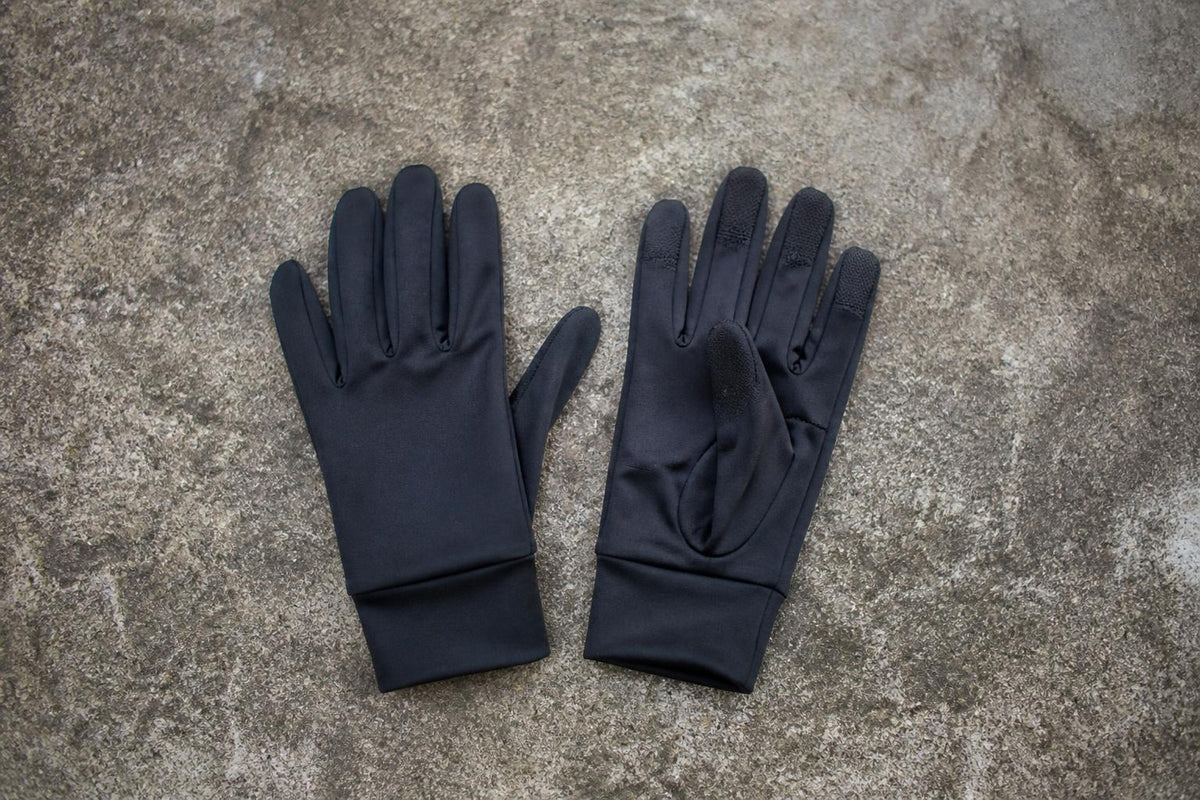
For many runners in the UK, the most useful winter glove is not the thickest one. It is the pair you will actually wear from October through to early spring, on cool mornings, damp evenings and breezy weekend runs, without feeling clumsy or overheated after ten minutes. In practice, that often means a light, close-fitting glove rather than a bulky insulated one.
A good pair of lightweight running gloves should take the edge off cold hands, still let you use your watch, zip a pocket or open a gate, and disappear easily into a pocket when the temperature lifts. If you run in ordinary British winter conditions, meaning mixed temperatures, drizzle, wet pavements and plenty of stop-start weather, that balance matters more than maximum insulation.
Why lightweight gloves are enough for many UK runs
Most UK winter runs do not happen in deep snow or prolonged sub-zero conditions. They happen in temperatures a few degrees above freezing, or in that broad band where it feels cold standing still but manageable once you are moving. That is exactly where lighter gloves tend to earn their place.
When you run, your core temperature rises quickly. Your hands may feel cold for the first mile, especially if you leave home before sunrise or after work, but once circulation improves a thin glove is often enough to keep them comfortable. Heavier gloves can start well and then become annoying, trapping too much heat and moisture as your pace settles.
British weather also changes within a single run. A route can begin in still, frosty air, move onto an exposed road with a headwind, then finish under light drizzle. A lightweight glove copes with that variety well because it adds a bit of warmth without committing you to a full winter setup. If the rain stays light, many runners will still be more comfortable in a thin synthetic glove than in a padded pair that gets wet and stays wet.
That is why we often point people first towards light gloves for everyday winter runs, rather than assuming everyone needs the warmest option available. For social runs, lunch breaks, parkrun mornings and steady midweek miles, lighter gloves are usually the pair that leave the drawer most often.
There is another practical point here. Winter kit only works if it is easy to live with. Thin gloves are simpler to wash, faster to dry, and easier to stuff into a jacket pocket, shorts pocket or running belt. If you are beginning or returning to running, that matters. You do not need a complicated cold-weather system for a 5 km or 10 km run around ordinary UK streets, parks and towpaths.
In our Field Notes, we generally treat glove choice as part of managing variable conditions, not as a contest to buy the most technical-looking item. Fair Weather Runner exists for people who want kit that works in the real world. For much of a UK winter, that means a lighter glove that covers the basics well.
What to look for before you buy
The best glove on paper can still be the wrong one if the fabric feels clammy, the cuff rides up, or the fingers are too long to grip properly. Before you buy, it helps to check a few practical details.
First, look at the fabric. For most runners, a lightweight synthetic fabric is the most useful starting point. It should feel soft against the skin, dry reasonably quickly, and stretch enough to move with your hand. A little elastane helps with shape and fit. Brushed inner fabrics can feel warmer, but the trade-off is often bulk and slower drying. If your winter running is mostly in cool, damp conditions rather than severe cold, a smoother lighter fabric is often more versatile.
Breathability matters as much as warmth. Hands sweat, even in cold weather. If the fabric traps moisture badly, gloves can feel colder later in the run than they did at the start. That is one reason very heavy waterproof-style gloves are often disappointing for routine use. Unless conditions are genuinely poor, they can become sweaty and uncomfortable.
Next, check the fit through the palm and fingers. Gloves for running should not feel like casual winter gloves. You want enough closeness for dexterity, especially if you use a GPS watch, carry a phone, or need to handle keys or a reusable flask. Loose fingertips bunch up and make simple tasks awkward. Too much spare material in the palm can also rub when wet.
Cuff length is easy to overlook, but it makes a real difference. A short cuff can leave a gap between glove and sleeve, particularly if your top shifts as you run. A slightly longer cuff helps seal that area and keeps the glove in place. If you often run in a long-sleeved top or a base layer with thumb loops, think about how the glove sits over or under the sleeve. Neither is universally right, but the combination should feel neat rather than fussy.
Seams are another small detail that becomes obvious on longer runs. Bulky internal seams across the fingertips or along pressure points can irritate surprisingly quickly. Flat seams or low-profile construction usually feel better when you are wearing the gloves for an hour or more.
Grip is worth checking too. If you carry a bottle, use poles on trails, or simply want a secure hold on your phone, some texture on the palm or fingers can help. It does not need to be aggressive. A subtle grip pattern is often enough. The key is that it should improve control without making the glove stiff.
Finally, think about packability. One of the main advantages of lightweight running gloves is that you can take them off and store them easily. A pair that folds into a pocket without fuss is more useful than one that only works if you keep it on the whole time. This is especially relevant in the UK, where an overcast 3°C start can turn into a mild 8°C finish.
If you are building out your winter kit more broadly, it is also worth looking at running and training clothing for changeable weather, because gloves work best when the rest of your layers are doing their job too.
How should running gloves fit?
Running gloves should feel close, but not tight. That is the short answer.
You want the fabric to sit against the skin with no obvious bagginess at the fingertips or across the palm. A close fit helps in three ways. It improves warmth by reducing air gaps, it preserves dexterity so you can use your hands normally, and it stops the glove shifting as the fabric gets damp from sweat or light rain.
Tightness is different from closeness, though. Gloves that compress too much can restrict movement and feel tiring over time. If the fingers are pulled hard at full extension, or if the webbing between fingers feels strained when you make a fist, the size is probably wrong. That kind of tension can also make hands feel colder, not warmer.
A good fit should let you open and close your hand naturally. You should be able to start a watch, adjust a zip, pull out a key and hold a phone without fighting the glove. If you cannot, the glove may be too bulky, too slippery inside, or simply the wrong shape for your hand.
Finger length matters more than many people expect. If the glove is too long in the fingers, you lose precision. If it is too short, you will notice pressure at the fingertips and between the fingers, especially after a few miles. Because hand shapes vary, two gloves made from similar fabrics can feel very different in use.
Cuff fit matters as well. The cuff should stay put without digging in. If it is too loose, cold air and rain can get in more easily. If it is too tight, it can feel restrictive at the wrist, particularly when layered with a watch and long sleeves.
For longer runs, comfort becomes the deciding factor. A glove that feels acceptable for twenty minutes can become irritating over ninety. Pay attention to whether you forget you are wearing it. That is usually the best sign that the fit is right. The best lightweight running gloves are not dramatic. They simply keep doing their job while you get on with the run.
When do you need more than a lightweight pair?
Light gloves cover a lot of UK running, but not all of it. There are clear situations where you will want more protection, or at least a way to add it.
The first is strong wind. Air temperature only tells part of the story. A cold headwind across open roads, fields or coastal paths can chill hands quickly, particularly if your gloves are very breathable. In those conditions, a thin glove may still be useful as a base, but you may want a more wind-resistant outer layer or a warmer pair.
The second is persistent rain. Light drizzle is one thing. Steady rain over an hour or more is another. Once gloves are properly wet, warmth depends heavily on the fabric and on how hard you are working. If you are running easily, coaching, marshalling, or spending time standing around before a club run starts, a thin glove may stop being enough.
Very low temperatures are the obvious case. In much of the UK, many runners can use lightweight gloves through most of winter. But if temperatures drop well below freezing, especially inland or in more exposed rural areas, you may need something warmer. The same applies if you are particularly prone to cold hands or have circulation issues. Comfort is individual. There is no prize for underdressing.
Pace matters too. Faster running generates more heat. Slow easy miles, recovery runs, walk-run sessions and social outings with plenty of standing still can all leave hands colder than expected. Newer runners often notice this because they are working at a lower absolute speed than someone doing a tempo session. A glove that is perfect for a brisk 10 km may feel thin on a gentle Sunday run with chatty pauses.
Layering can solve some of this without forcing you into one heavy glove for the whole season. A close lightweight glove under a shell-style overmitt can be an effective combination for very cold or wet days. Even if you do not use a formal layering system, it helps to think in those terms. Start with a glove that works most often, then add weather-specific protection when the forecast justifies it.
If you want a fuller look at choosing for warmth first, our guide to gloves that keep hands warm goes into those colder-use cases in more detail.
One final point on weather claims. In the UK, product descriptions may refer to water resistance or thermal performance, but there is no general consumer rule that turns a running glove into guaranteed waterproof kit just because the fabric has a coating. If complete weatherproofing matters to you, treat that as a separate requirement and check the construction carefully, especially seams, cuff design and drying behaviour after use.
How to build a practical cold-weather kit around them
Light gloves work best as part of a simple system. That does not mean buying lots of specialist items. It means making sure each piece does a clear job so you do not overheat, overdress or end up with one cold exposed area spoiling the run.
Start with your top half. A good base layer is often the foundation of winter comfort. If your torso stays at a stable temperature, your hands usually cope better too. Over that, use a long-sleeved top or light outer layer suited to the day. Many runners make the mistake of trying to solve whole-body cold with thicker gloves, when the real issue is that the core is underdressed.
Headwear comes next. On cold or windy days, a cap, beanie or neck covering can make a noticeable difference to overall warmth. If you keep heat loss under control at the head and neck, you may not need to upgrade your gloves at all. That is why we often suggest looking at winter headwear for cold and windy runs alongside gloves rather than in isolation.
Arm coverage is another useful lever. Arm sleeves can bridge the gap between a short-sleeved top and full winter layering, especially in autumn, early spring, or on days that warm up quickly. They also help reduce that exposed wrist area that can make gloves feel less effective than they really are. For runners who like flexible layering, arm sleeves for variable temperatures are often more useful than immediately moving to a much heavier glove.
Keep the rest practical. If you carry hydration on longer runs, make sure your gloves still let you handle your bottle or flask. If you use your phone for navigation or safety, check you can access it without taking ages at the roadside. If your route includes gates, dog leads, pushchairs or buggy running, dexterity becomes even more important.
The aim is not to create a technical winter uniform. It is to build a small set of kit that can be combined sensibly. A base layer, a regular long-sleeved top, light gloves, a hat or buff, and optional arm sleeves will cover a surprising amount of UK winter running. Add a warmer outer layer only when forecast conditions really call for it.
That practical approach suits most of the runners who shop with us. We are not assuming everyone is training for an ultra in the hills. Many of us are fitting runs around work, family and daylight, and we need kit that is easy to trust on ordinary roads and paths. That is the point of the Field Notes we publish through Fair Weather Runner, operated by Fleeta Limited. We focus on what proves useful repeatedly, not what sounds impressive in a product name.
You will also notice that cold-weather systems vary between sports. What works for a runner is not always what works on the bike, where wind chill is much harsher and your hands are more static. The same goes for clothing such as bib shorts, which solve a different problem entirely. Materials associated with performance branding, including KYMIRA, may have a place in some wardrobes, but fit, layering and weather judgement still matter more than labels.
If you remember one thing, make it this. Winter gloves do not need to be extreme to be effective. For many UK runs, the right lightweight running gloves are the pair that feel barely there, keep your hands comfortable once you are moving, and tuck away easily when the weather changes halfway home.
Are lightweight running gloves warm enough for winter?
Often, yes. For many UK runs, a thin pair is enough once you warm up. They are most useful in cool, damp or breezy conditions rather than severe cold.
Should running gloves be tight or loose?
They should feel close-fitting without squeezing your fingers. Too tight can feel colder by restricting comfort, while too loose can bunch and reduce dexterity.
Can I use gym gloves or casual gloves for running?
You can, but they are often less practical. Running gloves are usually lighter, easier to stash and better for maintaining finger movement on the move.
Do I need touchscreen fingertips?
Only if you regularly unlock your phone, change music or check maps mid-run. It is useful, but not essential if warmth and fit are better in another pair.
What is the best fabric for lightweight running gloves?
There is no single best fabric for everyone. Look for a soft, breathable material that feels comfortable when damp and dries reasonably quickly after wet runs.