
How to choose women’s cushioned sports socks for comfort
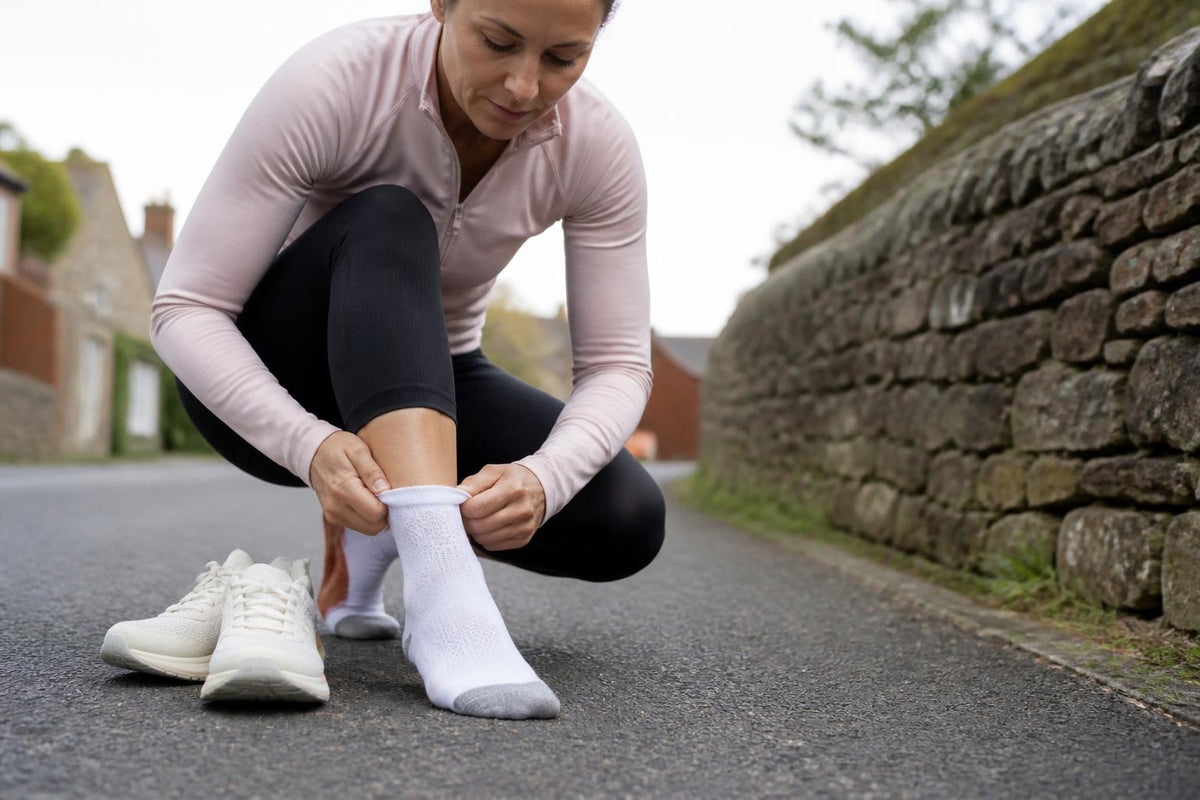
Choosing women’s cushioned sports socks is mostly about balancing comfort, fit and temperature. More padding is not automatically better. The right pair should soften pressure where you actually feel it, stay put inside your trainers, and still leave enough room for your feet to move naturally without rubbing.
For most everyday runners and gym-goers, the best starting point is simple. Pick a women’s sports sock with cushioning under the heel and forefoot, a smooth toe, breathable fabric, and a shape that fits closely through the arch. From there, adjust up or down depending on whether you mainly do short runs, walking, indoor training, longer easy outings, or cycling. That is usually a better route than buying the thickest pair you can find and hoping they suit everything.
What cushioning actually changes
Cushioning changes four practical things, pressure, feel, warmth and shoe fit.
The first is pressure. Padding under the heel and ball of the foot helps spread repeated impact across a slightly broader, softer surface. On a short easy jog, that may simply feel a bit more forgiving. On a longer recreational run or a day with plenty of walking, it can reduce that tired, beaten-up feeling underfoot. This is one reason many people move towards cushioned sports socks for women once they start running more regularly.
The second is feel. Some people like a close, direct connection with the shoe. Others prefer a softer, more protected feel, especially on pavement, treadmills or firmer gym floors. Cushioning changes that sensation more than many expect. A lightly padded sock can still feel responsive. A fuller cushioned sock can make the same trainer feel calmer and less harsh.
The third is warmth. More fabric holds more heat. In the UK, that can be useful for cool autumn starts, winter social runs or breezy outdoor sessions. Indoors, or in warm weather, thicker socks can quickly feel stuffy. If your feet tend to run hot, heavy cushioning may create more discomfort than comfort.
The fourth is fit inside the shoe. This is the one people often miss. A sock is part of the total volume your foot takes up in the trainer. Add a thick cushioned sock to a snug shoe and you may crowd the toes, lift the foot too high in the upper, or increase rubbing at the heel collar. Add a very thin sock to a shoe that already feels roomy and you may slide around. The right sock should work with the shoe, not fight it.
That is why we do not treat cushioning as a feature to judge in isolation. When we look at running socks at Fair Weather Runner, we think about how the padding sits alongside fabric weight, ventilation, cuff height and the sort of sessions people actually do.
How much padding do you really need?
Most people do not need maximum cushioning for every activity. It helps to think in three broad levels, light, medium and fuller cushioning.
Light cushioning suits short runs, warm conditions, indoor training, and anyone who prefers a closer fit in the shoe. If you do a 3 km to 5 km run before work, a circuit session at the gym, or a brisk walk followed by errands, light cushioning often feels cleaner and less bulky. It can also work well if your trainers already have a fairly soft midsole and do not leave your feet feeling battered.
Medium cushioning is the most versatile option for many readers. It gives a bit more protection under the heel and forefoot without making the sock feel heavy. If your week includes a mixture of easy runs, gym work, walking, and general training, this is usually the safest place to start. It is often the level that suits people returning to exercise too, because it offers comfort without dramatically changing shoe fit.
Fuller cushioning can make sense for longer recreational outings, cooler weather, firmer surfaces, or anyone who simply prefers a plusher feel. That might mean a weekend run that turns into an easy hour out, a day with lots of walking, or a social outing where you are on your feet longer than planned. It can also help if you know you are sensitive under the heel or forefoot. The trade-off is extra warmth and extra bulk.
A simple way to choose is to match the sock to the longest or most demanding thing you do most often, not the occasional edge case. If most of your activity is 30 to 45 minutes of mixed running and training, medium cushioning is usually more useful than a very thick pair saved for rare longer sessions. If nearly everything you do is short, warm and indoors, lighter socks may get worn far more often.
If you want a broader look at sock choices for steadier mileage, our guide to sports socks for longer, easier runs goes into that in more detail.
What to check besides cushioning
Cushioning matters, but it is not the whole story. A comfortable sock can still annoy you if the fabric, shape or finishing are wrong.
Start with fabric. For running and training, we usually suggest technical fibres that move moisture and dry reasonably quickly. Cotton-heavy socks often feel fine at first, then hold sweat and become clammy. That can increase friction, especially on longer outings or in milder weather. If you want a sock for regular exercise, breathable synthetic blends are normally the more practical choice.
Breathability matters even in the UK. Cool air outside does not always mean cool feet, especially if you run in waterproof layers, train indoors, or naturally run warm. Look for ventilation panels over the top of the foot if you tend to overheat. A sock with targeted cushioning underneath and lighter knit above can be much more comfortable than one that is uniformly thick all over.
Toe seams are another detail worth checking. A bulky or badly placed toe seam can become irritating far sooner than a lack of cushioning. For some people it is the main reason a sock gets left in the drawer. A flatter, smoother toe construction is usually worth prioritising.
Arch fit also matters more than many expect. A sock that hugs the midfoot tends to stay in place better, which means less bunching and less movement over the skin. That does not mean you need aggressive compression. It simply means the sock should not feel baggy through the arch.
Cuff height is mostly about preference and use. No-show and low-cut socks can feel neat for summer or gym work, but they need to sit securely and clear the shoe collar properly. Ankle and crew heights give more coverage, which can help with comfort in cooler weather, on mixed terrain, or if you dislike the feel of the shoe rubbing directly on your skin. They can also work better with leggings and cooler-weather kit.
Shape is the final piece. Some socks are cut quite straight. Others are more anatomically shaped. What matters is that the heel sits where your heel actually is, the toe box is not cramped, and the sock does not twist once on. That is especially important if you switch between different trainers for walking, running and the gym.
If you are updating more than socks, our women’s sportswear collection is a useful place to compare everyday kit that works for ordinary training routines.
How to avoid common fit and rubbing mistakes
The most common mistake is choosing a sock that is too thick for the shoe. If your toes feel squashed, the upper feels tighter than usual, or the heel collar starts pressing awkwardly, the sock may be adding too much volume. Many people assume rubbing means they need more cushioning, when in fact they need less bulk.
The second mistake is choosing a sock that is too loose. If the fabric wrinkles under the arch or bunches near the toes, friction usually follows. Even a well-cushioned sock will not stay comfortable if it moves around each time your foot lands. A proper close fit is more important than many people realise.
The third mistake is ignoring heat. If your feet feel overly warm on routine sessions, the sock may simply be too substantial for your pace, shoe and conditions. Heat and moisture often lead to rubbing before lack of padding does. This is especially common with treadmill running, indoor classes and milder UK days when people dress for the temperature outside, not for the heat they will generate once moving.
Another common issue is poor matching between sock and routine. A thick cushioned crew sock may feel lovely for a cool outdoor walk, then far too warm for a lunchtime gym session. Equally, a very light low-cut sock might be perfect in summer but leave you wanting more comfort on a damp, chilly weekend run.
To test fit properly, put the socks on with the trainers you actually use for that activity. Walk, jog on the spot, and notice three things. Does the heel stay put? Do the toes have room to spread naturally? Does the fabric stay smooth under the foot? If the answer to any of those is no, that pair is unlikely to improve once you are several miles in.
It is also worth checking wear patterns. If you repeatedly get rubbing in the same place, ask whether the issue is really the sock, or the combination of sock, shoe shape and lacing. Socks can help, but they cannot fully solve a trainer that does not suit your foot.
When to choose different socks for running, training and cycling
You do not need a complicated drawer full of highly specialised pairs, but it is sensible to separate socks by activity where the feel and demands are clearly different.
For recreational running, most people are happiest with light to medium cushioning, a secure arch fit, and enough breathability for the conditions. If your runs are mostly easy and steady, comfort tends to matter more than an ultra-minimal feel. This is where many women’s cushioned sports socks earn their place, especially for ordinary pavement running and social miles.
For indoor training, gym sessions and classes, lighter socks are often better. You are usually generating heat quickly, changing direction more, and not dealing with the same repetitive road impact as on a run. A sock that feels nimble, breathable and stable can be more useful than one with lots of plush padding.
For outdoor mixed sessions, think about the whole setup. If you are doing drills, easy running, walking between efforts and standing around before or after, a medium cushioned sock often makes sense. It gives enough comfort without becoming overly warm. In colder months, your sock choice also sits alongside the rest of your layering, including a good sports base layer if the session starts cold.
Cycling is slightly different. Because the foot is not striking the ground repeatedly, you may not want as much underfoot cushioning as you do for running. Too much bulk can make cycling shoes feel cramped, especially if they are already close-fitting. For social rides, commuting and cooler weather, some riders still prefer a bit of softness and warmth. For harder or warmer rides, a lighter, more breathable sock is often the better option.
The practical takeaway is simple. Running usually benefits from some targeted cushioning. Indoor training often benefits from less. Cycling often benefits from a closer, lower-bulk feel. You do not need to overthink it beyond that.
How to build a practical kit rotation
A sensible sock rotation for most people is small and useful. We would usually start with three groups.
First, two or three pairs of light or medium cushioned socks for your regular weekly running and training. These are your default pairs, the ones you wash and wear constantly.
Second, one or two slightly more cushioned pairs for longer easy runs, cooler weather, or days when your feet want a softer feel. These are not necessarily winter-only socks, but they are the pairs you reach for when comfort matters more than a stripped-back feel.
Third, one or two lighter, breathable pairs for gym sessions, indoor classes or warmer days. If you cycle as well, these may double up nicely for shorter rides.
That kind of rotation covers most real life use without clutter. It also helps your socks last better, because no single pair is being hammered several times a week. Wash them according to the care instructions, avoid excessive heat, and retire pairs once the heel, toe or arch structure stops doing its job. A sock does not need a hole in it to be past its best.
It also helps to think of socks as one part of a comfortable kit system. On cooler days, they work alongside leggings, a base layer, gloves or headwear. On changeable days, they need to make sense with the rest of what you are wearing, not just with the trainers. If you are building out practical everyday kit, our running socks collection sits alongside leggings, tops, caps, gloves and other useful pieces that support ordinary training.
At Fair Weather Runner, our Field Notes are written for people who want kit that works in normal life, not just in ideal conditions or marketing photos. That includes socks. The right pair should disappear once you are moving. If you notice them constantly, whether because they are too hot, too thick, too loose or too fussy, they are probably not the right choice for your routine.
As a final point, stock and variant availability can change, so we always recommend checking the current product pages before deciding on a specific pair or colour. Fair Weather Runner is operated by Fleeta Limited, and we keep our guidance practical for the way most people actually run, train and ride. If you keep your choice focused on fit, breathability, sensible cushioning and the shoes you already wear, you will usually end up with something far more comfortable than simply buying the thickest sock on the shelf.
Are cushioned sports socks better for beginners?
Often, yes. A moderate level of cushioning can feel more forgiving for new runners, but the best choice still depends on shoe fit, temperature and how far you usually go.
Can socks be too cushioned?
Yes. If a sock adds too much bulk, it can make a well-fitting shoe feel tight and increase rubbing. More padding is not always more comfortable.
Should women choose running socks differently from gym socks?
Usually, yes. Running often benefits from a more secure fit and targeted cushioning, while gym sessions may suit a lighter sock if impact and distance are lower.
Do thicker socks stop blisters?
Not automatically. Blisters are usually about friction, moisture and fit. A thicker sock can help some people, but the wrong thickness can also make rubbing worse.
How many pairs do I need for regular use?
For most people, three to five pairs is a practical starting point. That gives you enough for regular washing and different weather or activity choices.