
How to choose sports sunglasses that stay put on runs
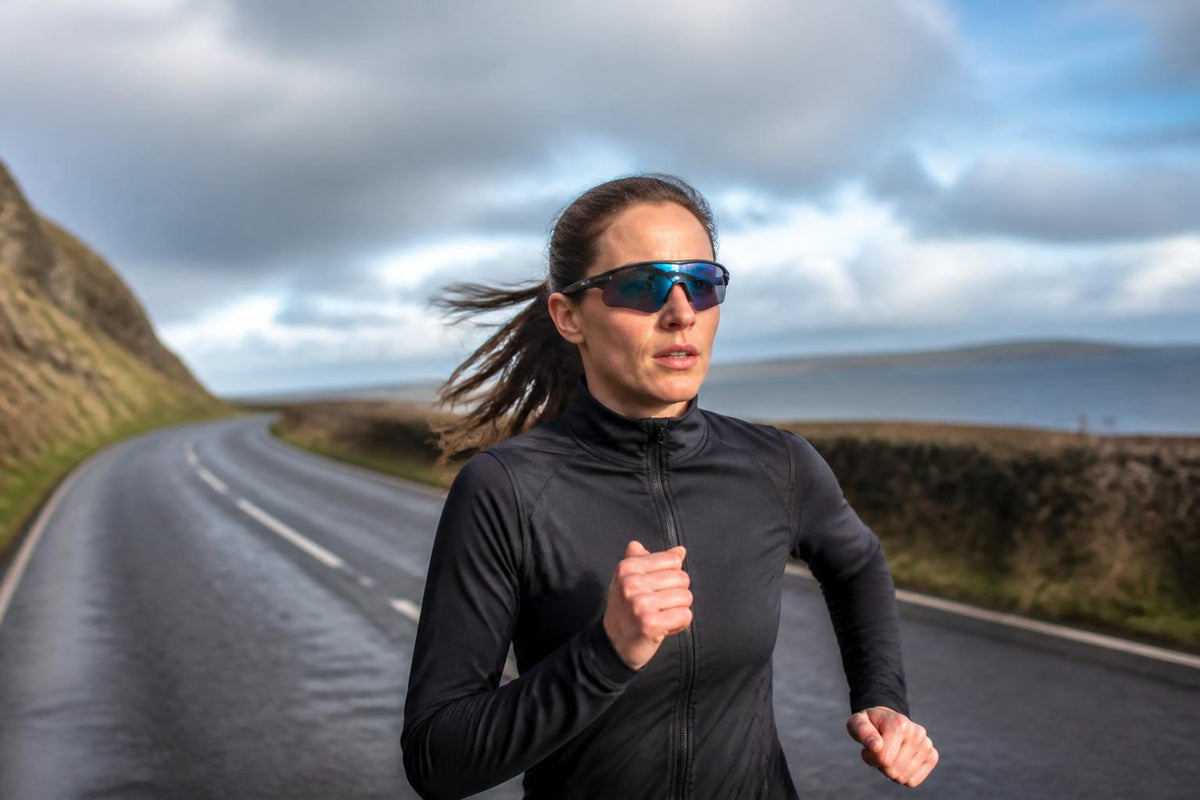
If you want sports sunglasses that stay put on runs, start with fit before lens colour or style. A stable pair should sit close to the face, hold gently at the nose and temples, and stay in place when you look down, turn your head, or settle into a steady pace. For most runners, wrap-around sports sunglasses are the easiest place to start because the shape helps with coverage and stability at the same time.
That does not mean the most enclosed frame is always the best choice. In the UK, where runs can move from open road to tree cover to bright gaps in the cloud within half an hour, the right pair is usually the one you forget you are wearing. That comes from balanced fit, useful lens tint, enough ventilation, and a frame shape that works with your cap, headwear and usual routes.
What wrap-around frames actually do for runners
Wrap-around frames are shaped to follow the curve of your face more closely than casual sunglasses. That changes three things that matter on a run, coverage, stability and protection.
First, coverage. A flatter casual frame often leaves more space at the sides, above the cheeks, or around the brow line. On an easy walk that may not matter. On a run, it often does. More side coverage helps cut glare entering from the edge of your vision, especially on open roads, near water, or when low sun is bouncing off parked cars and wet pavements. It also reduces the amount of moving air hitting your eyes directly.
Second, stability. Because the frame curves around the head, the contact points are usually better distributed. Instead of relying mostly on the nose bridge, a wrap-around shape can sit more securely through the temples and arms as well. That makes bouncing and gradual slipping less likely, particularly once you warm up and start to sweat.
Third, protection. For runners, that usually means wind, dust, grit, pollen and small bits of debris rather than impact in the cycling sense. If you have ever had dry eyes on an exposed route, or a watering eye from a gust across a field edge or seafront, you will know how distracting that can be. A more wrapped shape helps create a calmer pocket around the eye area.
This is why many runners who never liked sunglasses for casual wear get on better with sport-specific frames. They are not just a fashion variation. They are built for movement, airflow and repeated use. If you are comparing shapes, our running sunglasses collection is the sensible place to look first, then narrow down by frame depth, lens tint and how enclosed you want the fit to feel.
How should sports sunglasses fit?
Good fit should feel secure, not tight. If sunglasses stay in place only because they clamp hard at the sides of your head, they may pass a quick try-on and still become uncomfortable after twenty minutes.
Start at the nose. The frame should rest evenly without pinching or digging in. If the nose area is too narrow, you will feel pressure quickly. If it is too wide, the frame will slide as soon as sweat builds. A useful check is to put them on, look down at the floor, then jog lightly on the spot. If the frame drops or needs nudging back up straight away, the nose fit is probably too loose.
Then check the temples. The sides should touch gently and evenly. You want enough grip to stop side-to-side movement when turning your head, but not so much pressure that you feel a hotspot above the ears. Pressure here often seems minor indoors and much worse outdoors after a few miles.
At the ears, the arms should sit cleanly without lifting because of a cap, thick hair, or headwear. If you usually run in a cap in summer or a beanie in winter, test sunglasses with those on. Arms that are comfortable on their own can start pushing awkwardly once another layer is added. This matters if you rotate kit through the year, for example a cap in bright weather, gloves and a fleece in winter, or a lighter hat on drizzly days.
A simple fit routine before keeping a pair is worth doing:
- Put them on for ten minutes indoors.
- Walk around and look down, side to side, and over your shoulder.
- Jog on the spot.
- Smile and scrunch your face slightly, because some frames shift when your cheeks rise.
- Try them with your usual cap or headband.
- Check whether the lower edge touches your cheeks when you talk or breathe heavily.
What you are looking for is controlled contact. No slipping, no bouncing, no pressure point, no rubbing on the cheekbone.
Lens position matters too. The frame should sit high enough that you are looking through the optical centre of the lens in your normal running posture. If you often feel forced to tip your head back slightly to see ahead clearly, the shape may be wrong for your face even if the grip seems fine.
If you are between shapes, choose the pair that feels calm rather than aggressively grippy. A secure fit should come from the overall geometry, not from a frame trying to squeeze itself into place.
Which lens tint suits UK running conditions?
Most UK runners do not need the darkest lens available. Our conditions are too mixed for that to be the default. A lens that is excellent in bright open sun can feel gloomy under trees, on overcast mornings, or later in the day.
For ordinary recreational running in the UK, a moderate tint is often the most useful all-round choice. It takes the edge off brightness and glare without making shaded sections awkward. That suits the kind of route many people actually run, a bit of pavement, a park loop, some tree cover, then back onto open road.
Brown, bronze, rose and smoke-based tints are all common options, but the best choice depends on what bothers you most.
Brown or bronze tints can work well in changeable light because they often improve contrast a little, which helps on mixed surfaces, park paths and broken light under trees.
Grey or smoke tints tend to keep colours more neutral. Many runners like them on roads and open paths where the main aim is simply to reduce brightness without changing the scene much.
Rose or similar contrast-friendly tints can be useful in flatter light, though preference is quite personal here.
For low sun, especially in autumn and winter, side glare can be as annoying as direct brightness. In those conditions, frame shape matters almost as much as lens darkness. A slightly more wrapped frame with a moderate lens often works better than a very dark lens in a flatter frame.
If you also cycle occasionally, think about speed and airflow. On a bike, even a social ride creates more wind around the eyes than running does. That can make extra coverage more valuable, especially on descents or exposed roads. If one pair needs to cover both uses, aim for a balanced lens tint and a frame with decent wrap, rather than the darkest road-specific look.
We have covered tint choice in more detail in our guide to dark sports sunglasses for everyday running and our comparison of sports sunglasses for UK runners and riders.
One practical point for UK buyers, all sunglasses sold here should provide UV protection to the relevant standard, but that does not tell you how useful the lens will feel on your actual runs. UV protection and visible light transmission are not the same thing. A lens can fully protect against UV and still be too dark or too light for your preferred conditions. So choose the tint for your routes, not just the safety marking.
When wrap-around coverage helps and when it can be too much
More coverage is usually helpful when the environment is the problem. Think open roads, coastal paths, exposed parks, dry summer tracks, pollen-heavy days, or cold wind that makes your eyes water. In those situations, a more enclosed shape can make running noticeably more comfortable.
It also helps if you are prone to dry or sensitive eyes. Some runners avoid sunglasses because they assume lenses themselves are the issue, when in fact the wrong frame shape is letting too much air swirl around the eye area. A better wrap can solve that.
Another good use case is low winter sun coming from the side. You may not need a very dark lens, but you may want the extra side protection that a wrapped frame gives.
Where can it feel like too much? Usually in warm, humid conditions, or for runners who dislike feeling enclosed around the face. If a frame sits very close with limited airflow, lenses can mist more easily when you slow to a walk, stop at crossings, or wear a cap low on a damp day. Some people also simply prefer more open peripheral awareness, especially in busy urban settings.
This is why not every runner needs the deepest, most shield-like design. A lighter wrap can still offer enough stability and side protection without feeling bulky. If your runs are mostly local roads, parks and fair-weather social miles, comfort may matter more than maximum enclosure.
Headwear changes this balance. A cap can add useful shade from above, which means you may not need such heavy top coverage from the frame itself. In winter, a hat or ear-warming headband can alter how the arms sit and how much ventilation reaches the lens. If you already dress in layers, for example a cap with a lightweight base layer on cool mornings, or gloves and a fleece when the temperature drops, think about sunglasses as part of the whole setup rather than in isolation.
That is also true if you use performance clothing from brands such as KYMIRA alongside more everyday kit. The sunglasses still need to be comfortable on a normal run, not just technically impressive on paper.
What to check before buying online
Buying online is straightforward if you use a short checklist and stick to what the product page actually shows now. Variant availability changes, and that matters with lenses and frame colours in particular, so always check the current listing rather than assuming a tint or finish is still in stock.
Here is what we suggest checking before you buy.
Look closely at frame shape. Product photos should tell you whether the frame is deeply wrapped, moderately curved, or closer to a casual sport shape. If you know flatter sunglasses tend to catch wind or slide on you, do not talk yourself into them because the lens colour looks good.
Check the nose area. Is it shaped for grip and comfort, and does it look likely to suit your face width and bridge height? If the product page includes multiple angles, use them.
Check arm design and cap compatibility. If you run in a cap regularly, think about whether the arms look slim enough to sit comfortably under it. The same goes for headbands and winter hats.
Think about your usual routes. Open towpath, tree-lined park, suburban pavement and occasional cycling use all place slightly different demands on tint and coverage. Buy for the miles you actually do, not the ones you imagine doing.
Review lens tint in plain daylight terms. Ask yourself whether you need all-round use in mixed cloud, better comfort in bright sun, or extra contrast under trees. If the page offers several lens options, choose the one that matches your normal conditions most of the time.
Check cleaning and storage. Sports sunglasses pick up sweat, sunscreen and road grime. Make sure you are happy with the care instructions and whether a storage pouch or case is included. A pair that lives loose in a kit bag will not stay in good condition for long.
Think about how they fit into your wider kit. If you are ordering sunglasses alongside headwear, gloves, sleeves or clothing, make sure each item works for the same season and use. We stock practical kit across these categories, from sunglasses to arm sleeves and cycling pieces such as bib shorts, but the best buy is still the one that matches your routine.
Finally, use our Field Notes in the same practical spirit you would use before buying socks, a cap or a new base layer. Read the product page, compare the shape, and be honest about your own habits. If you only run a few times a week on mixed local routes, you probably do not need the most extreme frame. You need a pair that feels steady, gives enough coverage, and disappears once you get moving.
That is the real test. The right wrap-around sports sunglasses should not demand attention every mile. They should simply stay put, keep your eyes comfortable, and let you get on with the run. Fair Weather Runner is built around that kind of choice, useful kit for ordinary training in real UK conditions, operated by Fleeta Limited.
Are wrap-around sports sunglasses better for running?
They can be, especially if you want more side coverage from glare, wind and grit. Better depends on fit, comfort and the light you usually run in, not on wrap-around shape alone.
Should running sunglasses be tight?
No. They should feel secure without pinching your nose or temples. If they stay in place only because they are very tight, they may become uncomfortable on longer runs.
What lens colour is most useful in the UK?
For many UK runners, a versatile mid-tint works well because conditions change quickly. Very dark lenses can feel limiting on shaded routes or dull days.
Can I use the same sunglasses for running and cycling?
Often yes, if the fit is stable and the coverage suits both uses. Check comfort with your usual cap or helmet setup and confirm current product details before choosing.
Do wrap-around frames stop lenses steaming up?
Not automatically. More coverage can help shield your eyes, but ventilation and fit still matter. Frames that sit too close to your face may feel warmer in humid conditions.